 Save
Save The first time I had an Italian Beef sandwich in Chicago, I stood at a tiny counter near Union Station, juice dripping down my arm, wondering how something so messy could taste so perfect. Later that week, I called my grandmother to describe it, and she laughed, saying that is exactly how Italian-American home cooks have been stretching tough cuts of beef into memorable meals for generations. Now, every Sunday football game at our house features a giant pot of these sandwiches, and watching friends take that first uncertain bite before their eyes light up has become its own kind of tradition.
Last winter during a blizzard, my neighbor texted that she was snowed in with her three kids and running low on groceries. I bundled up and trudged through knee-deep drifts with a slow cooker full of this beef and a bag of rolls. We spent the afternoon watching the snow pile up outside while dipping sandwiches into little cups of jus, and her kids actually fought over the last pepper-strewn roll. Now every time the weather forecast turns ominous, I get a playful text asking if the beef pot is ready.
Ingredients
- Beef chuck roast: This cut has enough marbling to stay juicy through hours of cooking, and connective tissue that melts into silk
- Olive oil: Creates that gorgeous brown crust on the beef which adds depth to the final broth
- Kosher salt and black pepper: A simple but essential foundation, do not be tempted to skip the seasoning step
- Beef broth and water: The combination creates a rich but not overwhelmingly beefy cooking liquid
- Worcestershire sauce: Adds that subtle umami punch that makes people ask what is your secret ingredient
- Italian seasoning blend: Dried oregano basil and rosemary work together to evoke old-school Italian delis
- Garlic and onion powder: These dissolve into the broth better than fresh would during long cooking
- Crushed red pepper flakes: Even a tiny amount warms the whole dish without making it spicy-hot
- Bay leaf: One leaf quietly works in the background adding an herbal complexity you would miss if it were gone
- Sturdy Italian rolls: Soft rolls will disintegrate, so hunt down something with a crust that can hold up to serious dunking
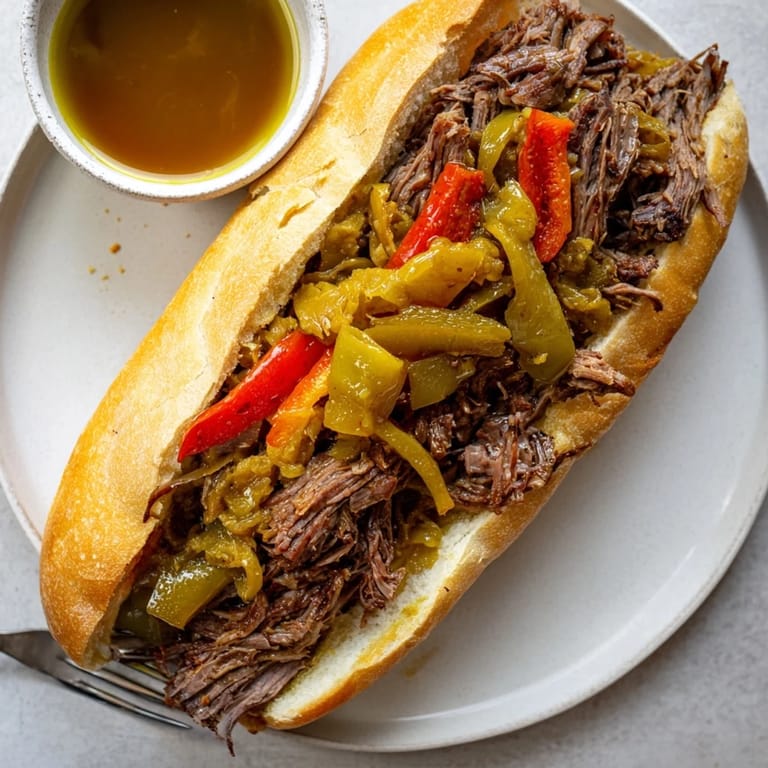
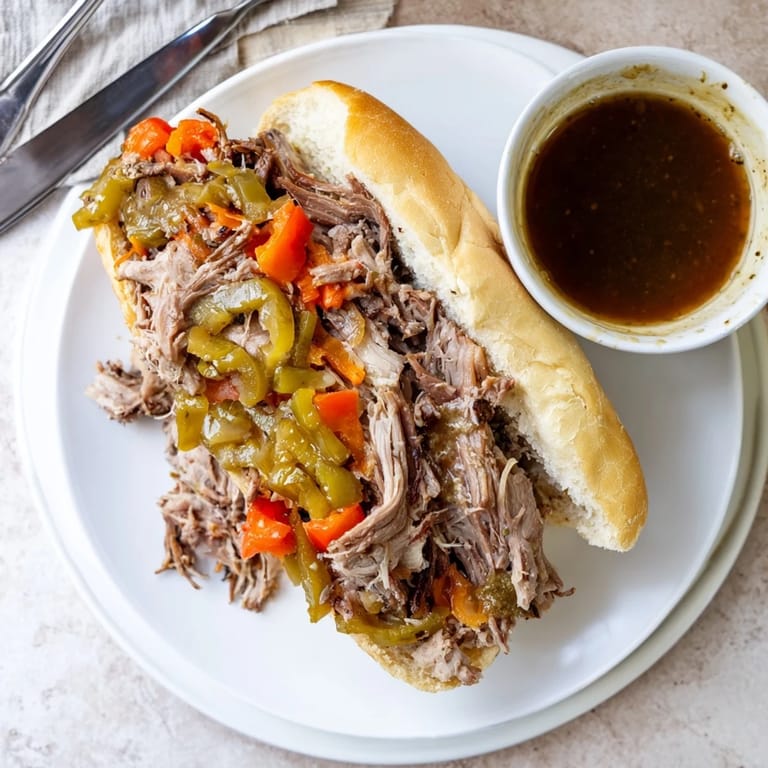
- Hot giardiniera: This Chicago staple of pickled cauliflower carrots and peppers in oil is non-negotiable for authenticity
- Roasted sweet bell peppers: They mellow out the heat and add a sweet smoky note that balances the sharp pickles
Tired of Takeout? 🥡
Get 10 meals you can make faster than delivery arrives. Seriously.
One email. No spam. Unsubscribe anytime.
Instructions
- Sear the beef with intention:
- Pat that chuck roast completely dry with paper towels until no moisture remains on the surface, then season it generously with salt and pepper. Heat your olive oil in a heavy Dutch oven until it shimmers, then brown the beef on every side until it develops a deep mahogany crust, which will take about three to four minutes per side.
- Build the flavorful braising liquid:
- Pour in the beef broth, water, and Worcestershire sauce, scraping up any browned bits from the bottom of the pot because that is where all the flavor lives. Stir in the Italian seasoning, garlic powder, onion powder, and red pepper flakes, then tuck in the bay leaf like a little flavor treasure.
- Let time do its work:
- Cover the pot and slide it into a 325 degree oven for four hours, flipping the beef once halfway through, or set your slow cooker to low for eight hours. The beef is ready when it yields to absolutely no resistance and practically falls apart when you poke it.
- Shred and reunite:
- Move the beef to a cutting board and let it rest for ten minutes while you skim any excess fat floating on top of the liquid. Use two forks to pull the beef into shreds, tossing out any gnarly fat pieces, then return all that beautiful meat back to the pot so it can drink up all those juices.
- Assemble with confidence:
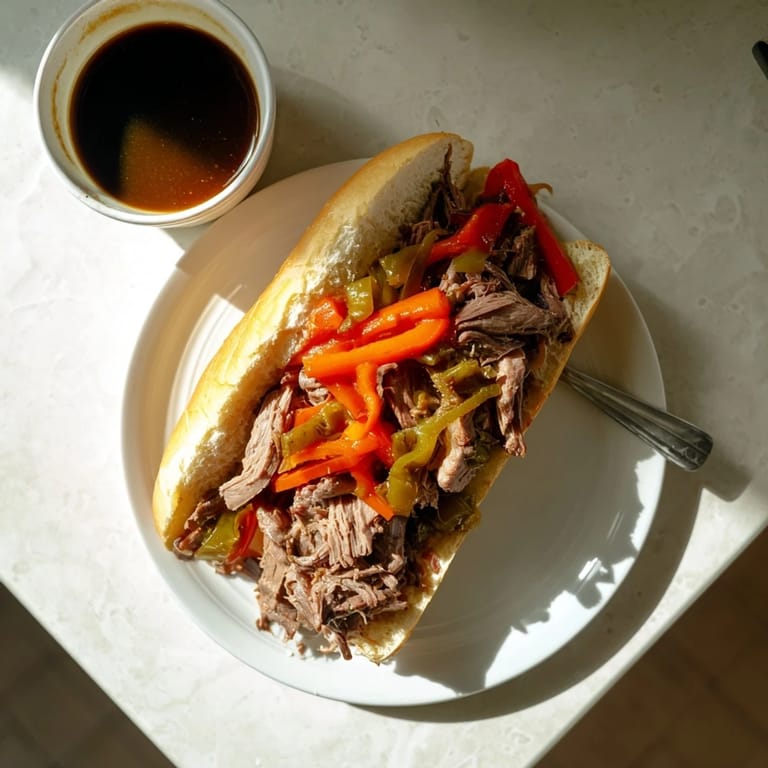
- Split your rolls and give them a quick toast if you like, then pile each one high with the juicy beef. Spoon a little extra jus over the meat, crown it generously with giardiniera and those sweet peppers, and pass small bowls of the remaining au jus for proper dunking.
 Save
Save My dad always claims he can judge an Italian beef place by their jus, and after years of testing my recipe on him, he finally admitted mine might be better than his favorite sandwich shop back home. That compliment, coming from a man who has been eating these sandwiches since the 1970s, meant more than any restaurant review ever could.
The Art of the Proper Dunk
Chicagoans have strong opinions about sandwich dunking technique, and I have learned there is no wrong way if it ends with a juicy sandwich. Some prefer the quick dip approach, barely kissing the bread to the surface, while others go full immersion for three full seconds. The trick is finding your personal sweet spot between structural integrity and maximum beef absorption.
Make-Ahead Magic
These sandwiches actually improve with time, making them perfect for meal prep or feeding a crowd. The beef develops deeper flavor after sitting in its juices overnight in the refrigerator, and reheating is as simple as warming everything gently on the stove. I always make extra just to have leftover sandwiches for lunch the next day.
Choosing Your Giardiniera
The giardiniera debate in Chicago runs hotter than a summer sidewalk, with passionate defenders of both mild and hot versions. I keep both on hand, letting guests choose their own adventure, and have discovered that the oil-packed Chicago style beats the vinegar-based versions every time for this sandwich.
- Look for giardiniera where the vegetables are still slightly crunchy, not mushy from over-processing
- If you cannot find giardiniera, chopped pickled pepperoncini and jarred roasted red peppers make a decent substitute
- Drain the giardiniera well or your sandwich will swim in too much liquid, which nobody wants
 Save
Save There is something deeply satisfying about feeding people a sandwich so good it demands their complete attention, napkins be damned. Watch your guests take that first bite and suddenly all conversation stops, replaced by happy sighs and the quiet music of people really enjoying their food.
Recipe FAQs
- → What makes Chicago Italian beef different from other beef sandwiches?
Chicago Italian beef stands apart through its signature preparation: beef slow-cooked in seasoned broth until fork-tender, then piled high on Italian rolls. The essential trio includes spicy giardiniera for authentic crunch and heat, plus au jus for dipping that keeps every bite moist and flavorful.
- → Can I make this in a slow cooker?
Absolutely. Brown the beef first for depth of flavor, then transfer to your slow cooker with all the cooking liquid ingredients. Cook on low for 8 hours or high for 4-5 hours until the beef shreds easily with a fork.
- → What is giardiniera and where do I find it?
Giardiniera is a Chicago-style pickled vegetable relish typically containing cauliflower, carrots, celery, peppers, and olives in oil and vinegar. Look for it near pickles or in the international aisle. Both mild and hot varieties work here.
- → How do I keep the sandwich from getting soggy?
Don't dunk the rolls directly unless serving immediately. Instead, spoon the au jus over the meat after assembly, and serve extra jus on the side for individual dipping. Lightly toasting the rolls also helps maintain structure.
- → Can I add cheese to my Italian beef sandwich?
Provolone is the traditional choice, melted right onto the hot meat. You can also try mozzarella for a milder flavor. Add the cheese after shredding the beef and return it to the hot liquid briefly to melt.
- → What's the best cut of beef for Italian beef sandwiches?
Chuck roast is ideal because it becomes tender and shreddable after long cooking while remaining flavorful. Look for a well-marbled piece with good fat content—it renders down during cooking and keeps the meat moist.