 Save
Save My nonna used to say you could tell how much someone loved you by how tightly they rolled their braciole. I never understood it until I made my first batch and watched one unravel completely in the sauce, spilling raisins and pine nuts like a culinary disaster. The smell, though—garlic, tomato, and browning meat—was so intoxicating that I didn't even care. I fished out the filling, re-rolled the whole thing with toothpicks, and kept going. That stubbornness, that refusal to waste good ingredients, felt very Sicilian.
I made this for a small dinner party once, and my friend's husband—who claimed he hated raisins in savory food—went completely silent after his first bite. He looked up, confused, then asked for seconds. His wife laughed so hard she nearly choked on her wine. That night I learned that context changes everything, and that a well-balanced filling can convert even the most skeptical eater. The conversation turned to childhood meals, and suddenly everyone had a story about a grandmother's secret recipe.
Ingredients
- Thin beef slices (top round or flank): You want them pounded thin so they roll easily and cook tender; thicker cuts will stay tough no matter how long you simmer.
- Pecorino cheese: Sharp and salty, it anchors the filling with that distinct Sicilian punch; Parmesan works but tastes milder.
- Pine nuts: Toast them lightly first or they'll taste flat; the nutty richness is essential to the traditional filling.
- Raisins: They plump up in the sauce and add little bursts of sweetness that balance the sharpness of the cheese.
- Fresh parsley and basil: Brightness matters here; dried herbs won't give you the same green, herbaceous lift.
- Garlic: Minced fine so it distributes evenly and doesn't create harsh pockets of raw flavor.
- Breadcrumbs: They bind the filling and soak up juices, preventing the roll from getting soggy inside.
- Crushed tomatoes: Use good quality canned San Marzano if you can; they're sweeter and less acidic.
- Red wine: Optional but recommended; it adds depth and helps deglaze all those beautiful browned bits.
- Kitchen twine or toothpicks: Twine is traditional and easier to remove, but toothpicks work in a pinch—just count them so you don't leave any behind.
Tired of Takeout? 🥡
Get 10 meals you can make faster than delivery arrives. Seriously.
One email. No spam. Unsubscribe anytime.
Instructions
- Prep the Beef:
- Lay each slice flat on a cutting board and pound gently with a meat mallet until they're about 1/4-inch thick, working from the center outward. Season both sides with salt and pepper, being generous but not heavy-handed.
- Make the Filling:
- In a bowl, mix together the pecorino, toasted pine nuts, raisins, parsley, basil, garlic, and breadcrumbs until evenly combined. The mixture should look chunky and fragrant, not pasty.
- Roll the Braciole:
- Spoon an even layer of filling onto each beef slice, leaving about half an inch around the edges. Roll tightly from one short end to the other, tucking in the sides as you go, then secure with kitchen twine or toothpicks.
- Sear the Rolls:
- Heat 2 tablespoons of olive oil in a large skillet over medium-high heat until shimmering. Brown the braciole on all sides, turning carefully with tongs, about 6 to 8 minutes total, then remove and set aside.
- Build the Sauce:
- In the same skillet, add another 2 tablespoons of olive oil and sauté the chopped onion until soft and translucent, about 3 minutes. Stir in the garlic and cook just until fragrant, about a minute.
- Deglaze and Simmer:
- Pour in the red wine if using, scraping up all the browned bits stuck to the pan, and let it bubble down by half. Add the crushed tomatoes, oregano, salt, pepper, and a pinch of sugar if your tomatoes taste sharp.
- Braise the Braciole:
- Nestle the seared rolls back into the sauce, spooning some over the tops. Cover the skillet, reduce heat to low, and simmer gently for about an hour and fifteen minutes, turning the rolls occasionally so they cook evenly and stay moist.
- Finish and Serve:
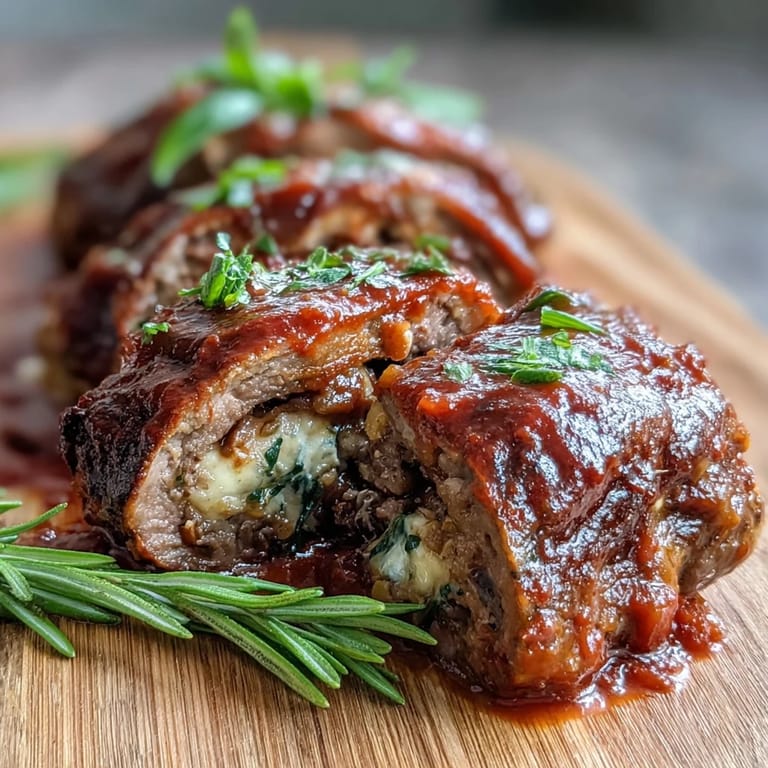
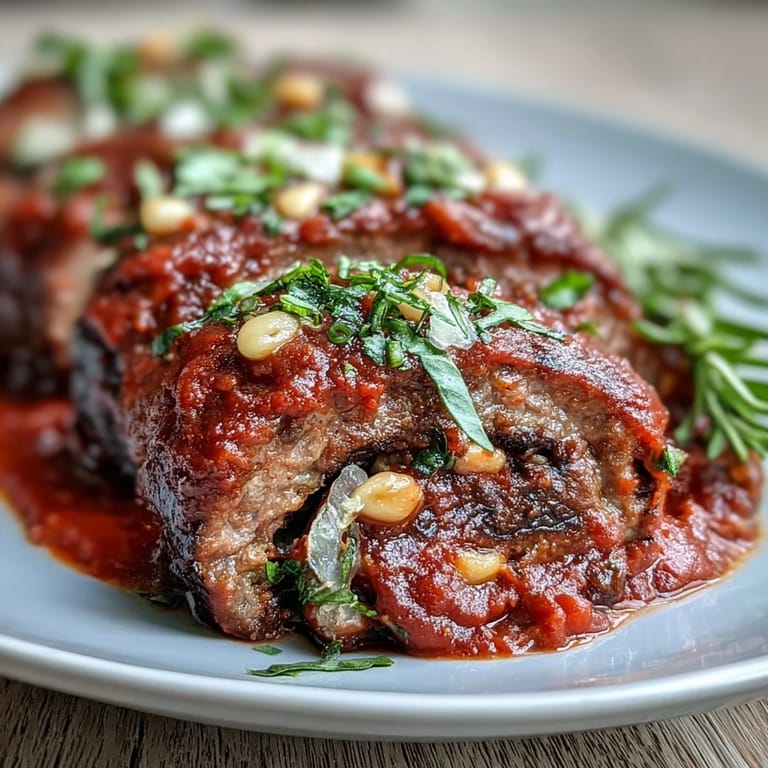
- Carefully remove the braciole from the sauce, snip off the twine or pull out the toothpicks, and slice each roll into thick rounds. Spoon the rich tomato sauce over the top and serve immediately.
 Save
Save One Sunday, I served this with a big bowl of rigatoni tossed in the leftover sauce, and my uncle declared it the best thing I'd ever cooked. He's not one to give compliments lightly, so I took it as a sign that I'd finally gotten the balance right. We sat around the table for hours, talking and laughing, the kind of meal that lingers in your memory long after the dishes are done. That's what braciole does—it slows time down and makes you grateful for the people around you.
Choosing the Right Cut
Top round is lean and affordable, but flank steak has more flavor and a better grain for rolling. I've used both, and honestly, either works as long as you pound it thin and don't overcook it. Ask your butcher to slice it thin if you're not confident with a knife; they'll usually do it for free and save you the trouble. The goal is even thickness so the rolls cook at the same rate and don't end up with tough spots.
Filling Variations
Some Sicilian cooks add chopped hard-boiled egg or bits of prosciutto to the filling, which makes it even richer and more luxurious. I've tried it with a handful of chopped spinach once, and it added a nice green note without changing the character of the dish. You can also swap the raisins for dried currants or even chopped dried apricots if you want a different kind of sweetness. The beauty of this recipe is that it's flexible enough to handle your personal touches without losing its soul.
Serving Suggestions
This pairs beautifully with creamy polenta, which soaks up the sauce like a dream, or with a simple side of roasted vegetables to keep things lighter. I love serving it with crusty bread for mopping up every last drop, and a glass of Nero d'Avola or another robust Sicilian red. If you have leftover sauce, toss it with rigatoni or penne the next day—it only gets better as the flavors meld. You can also make the braciole a day ahead and reheat gently; the flavors deepen overnight.
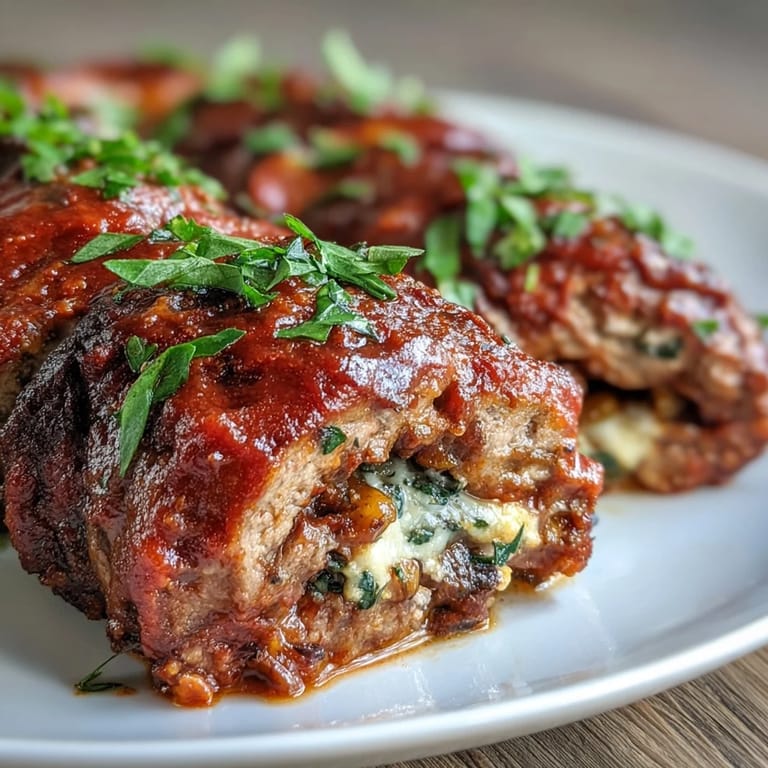
- Slice the rolls thickly so you can see the beautiful spiral of filling inside.
- Garnish with fresh basil or a sprinkle of extra pecorino just before serving.
- Don't forget to taste the sauce and adjust the seasoning at the end—it should be rich, balanced, and just a little sweet.
 Save
Save Every time I make braciole, I think about how food carries memory and tradition in ways words never could. It's not just dinner—it's a way of honoring the people who taught you to cook, and the ones you're feeding now.
Recipe FAQs
- → What cut of beef works best for braciole?
Thin slices of beef top round or flank steak work best, pounded to 1/4-inch thickness for easy rolling and tender results after braising.
- → Can I make braciole ahead of time?
Yes, you can prepare and sear the rolls up to 24 hours in advance, then refrigerate and simmer in sauce when ready to serve.
- → What can I substitute for pine nuts?
Chopped walnuts or almonds make excellent substitutes for pine nuts, offering similar texture and nutty flavor to the filling.
- → How do I prevent the rolls from falling apart?
Secure tightly with kitchen twine or toothpicks after rolling, and avoid over-handling while searing and simmering in the sauce.
- → What should I serve with braciole?
Serve with pasta, creamy polenta, or crusty Italian bread to soak up the rich tomato sauce, alongside a robust Sicilian red wine.
- → Can I freeze cooked braciole?
Yes, braciole freezes well for up to 3 months. Cool completely, store in sauce in airtight containers, and reheat gently on the stovetop.