 Save
Save There's something about October that makes me crave butternut squash soup—maybe it's the way the farmers market suddenly fills with those burnt-orange gourds, or maybe it's because my neighbor mentioned hers was life-changing. The first time I roasted squash instead of boiling it, the smell that filled my kitchen was so unexpectedly rich and caramelized that I knew I'd been doing it wrong all those years. Now, this soup feels less like a recipe and more like an annual ritual, something warm to return to when the days get shorter.
I made this for a small dinner party last November when everyone was still pretending summer wasn't really over, and serving bowls of silky butternut soup seemed to collectively whisper permission to everyone that yes, it was finally okay to admit fall had arrived. Someone asked for the recipe before finishing their bowl, which has never happened to me before, and I realized it wasn't really the soup they wanted—it was that feeling of being warm and taken care of.
Ingredients
- 1 medium butternut squash (about 1.2 kg), peeled, seeded, and diced: The star—and roasting it (not boiling) is the secret that changes everything, bringing out a caramel-like sweetness that makes the whole soup sing.
- 1 large onion, chopped: This becomes almost invisible once blended, but it builds the foundation of every good soup.
- 2 medium carrots, peeled and chopped: A backup sweetness that balances whatever spices you add, keeping the soup from feeling one-dimensional.
- 2 cloves garlic, minced: Don't skip this—even though it's just two cloves, they bloom when toasted with the spices and add serious depth.
- 800 ml vegetable stock: The liquid backbone; I use homemade when I have it, but good-quality boxed stock works beautifully too.
- 200 ml coconut milk (or heavy cream for a richer version): This is where you decide your mood—coconut milk keeps it light and tropical, cream makes it feel luxurious and almost dessert-like.
- 2 tbsp olive oil: Use good olive oil here since it flavors the squash directly during roasting.
- 1/2 tsp ground cumin: A whisper of warmth that ties everything together without announcing itself.
- 1/4 tsp ground nutmeg: The secret weapon that makes people ask what that indescribable flavor is—then refuse to believe it's just nutmeg.
- Salt and black pepper, to taste: Tasted at the very end, when you can actually adjust to your preference.
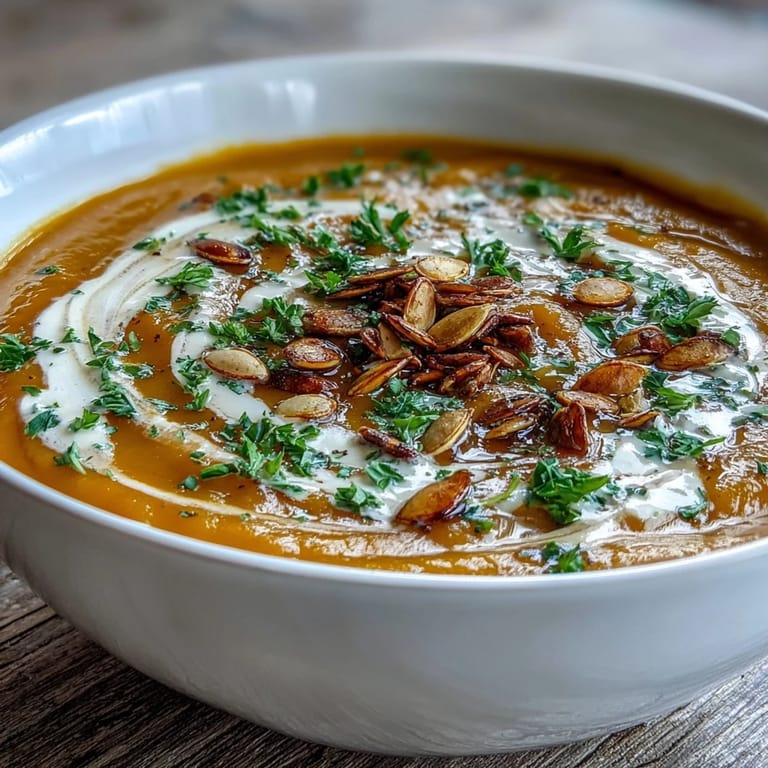
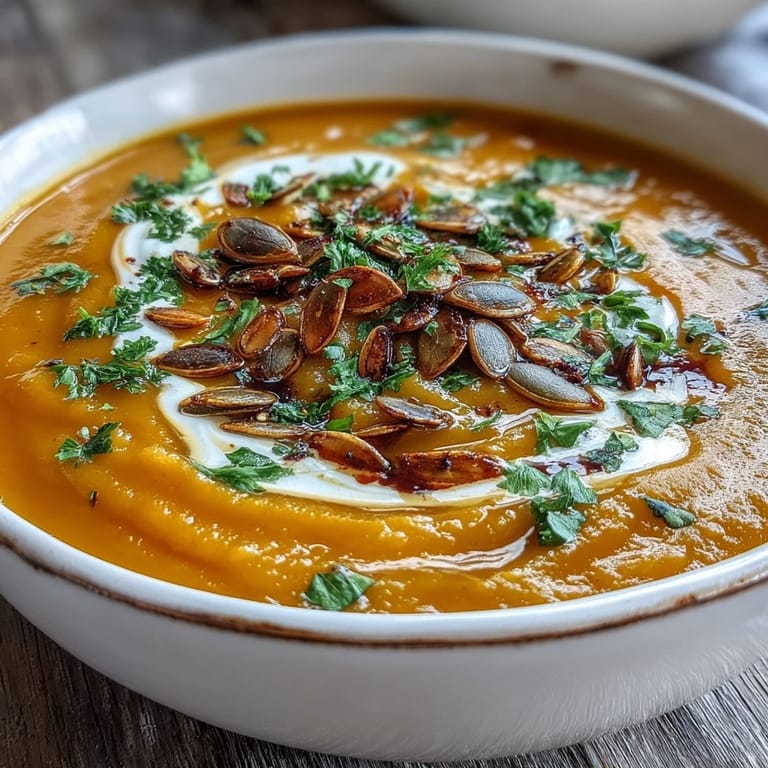
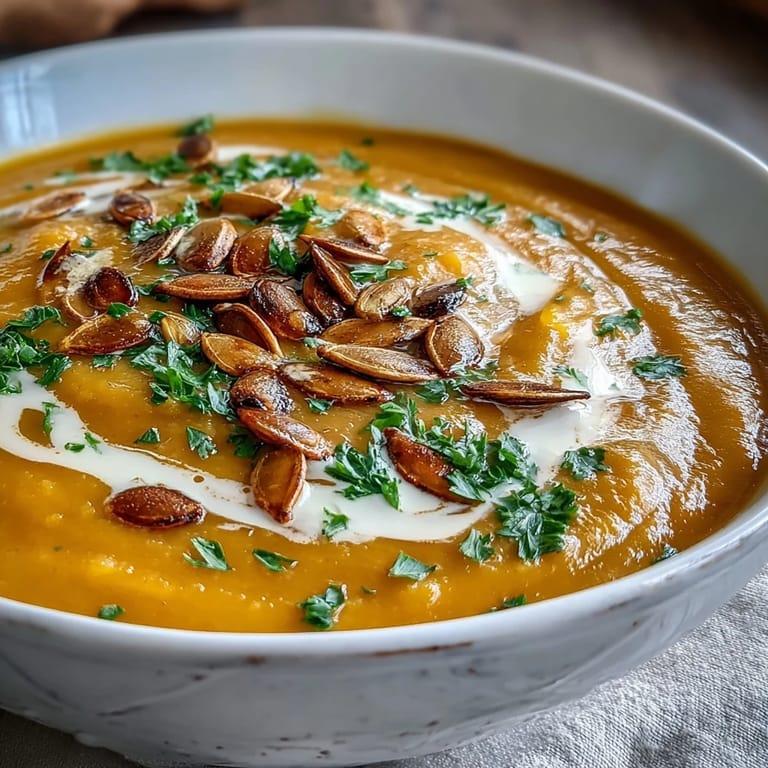
- Fresh parsley or coriander, chopped (optional): A little brightness and color if you're feeling fancy, but honestly the soup is beautiful without it.
- Toasted pumpkin seeds (optional): Adds a subtle crunch and makes it feel intentional, like you planned this far in advance.
Tired of Takeout? 🥡
Get 10 meals you can make faster than delivery arrives. Seriously.
One email. No spam. Unsubscribe anytime.
Instructions
- Roast your squash first:
- Heat your oven to 200°C (400°F), toss your diced squash with a tablespoon of olive oil, salt, and pepper, then spread it on a baking tray where each piece can breathe a little. Let it roast for about 25 minutes—you're looking for the edges to turn golden and caramelized, which is when the magic happens.
- Build your base while squash roasts:
- In a large pot over medium heat, warm the remaining olive oil and add your chopped onion and carrots. Let them soften gently for 5 to 7 minutes, stirring occasionally—this isn't a rush, it's the foundation of flavor.
- Wake up the spices:
- Once the vegetables are tender, add your minced garlic, cumin, and nutmeg and cook for about a minute until the whole kitchen smells like autumn. You'll notice the aroma shift when the spices release their oil—that's your signal you've done it right.
- Bring it together:
- Add the roasted squash to the pot, pour in your vegetable stock, and bring everything to a gentle boil. Then reduce the heat and let it simmer quietly for about 10 minutes so all the flavors get to know each other.
- Blend until silky:
- Using an immersion blender, purée the soup directly in the pot until it's completely smooth—if you're using a regular blender, work in batches and be very careful with the heat. This is honestly the most satisfying part, watching it transform from chunky to velvety.
- Finish with cream and season:
- Stir in your coconut milk or cream, heat gently just until it's warm throughout, then taste and adjust your salt and pepper. This final tasting moment is crucial—the soup tells you exactly what it needs.
- Serve and celebrate:
- Ladle into bowls and top with whatever garnishes call to you—the fresh herbs add brightness, pumpkin seeds add texture, and an extra drizzle of cream makes it feel special.
 Save
Save My sister once made this soup on a day when everything had gone wrong—and she told me later that standing there watching the immersion blender turn something rough into something smooth felt almost therapeutic. That's when I understood this soup isn't just about hunger; it's about transformation and gentleness, which is maybe why it shows up on the table when people need it most.
The Secret of Roasting
I used to think roasting was an unnecessary extra step, but once I realized that it caramelizes the squash's natural sugars and deepens the whole flavor profile, I understood why every good soup recipe mentions it. The difference between roasted and boiled is the difference between singing and speaking—roasted squash has a voice, while boiled squash just fills space. Don't skip this part, even though it tempts you to when you're in a rush.
When to Use Coconut Milk Versus Cream
Coconut milk keeps the soup lighter, brighter, almost Mediterranean if you lean into herbs, while heavy cream makes it feel indulgent and rich, the kind of soup you'd serve at a dinner party where people expect something special. I've learned that your choice here depends on your mood and who you're feeding—coconut milk if you want to feel a little adventurous, cream if you want pure comfort. Some days call for one, some days call for the other, and honestly, the soup doesn't judge either way.
Make It Your Own
This is the beautiful part about a recipe like this—it's a template waiting for your personal touches. I've seen people add a pinch of chili flakes for heat, a splash of apple cider vinegar for brightness, or even a small piece of fresh ginger for complexity, and every version tastes like they meant to make it that way. The soup welcomes creativity because its foundation is strong enough to handle it.
- Try adding a small pinch of chili flakes when you toast the spices if you like your comfort food with a gentle kick.
- Swap a quarter of the squash for sweet potato if you want extra creaminess without adding more dairy.
- Blend in a handful of fresh sage or thyme at the very end if you want to add herbaceous depth and seasonal flavor.
 Save
Save This soup has become my answer to almost every season change, every moment when I need something nourishing without feeling heavy, and every time someone says they don't know what to cook. It's simple enough that it never feels like work, and good enough that it feels like you tried.
Recipe FAQs
- → Can I make this soup ahead of time?
Absolutely. This soup keeps well in the refrigerator for 3-4 days and actually tastes better the next day as flavors meld together.
- → Can I freeze this soup?
Yes, freeze in airtight containers for up to 3 months. Thaw overnight in the refrigerator before reheating gently on the stovetop.
- → What can I use instead of coconut milk?
Heavy cream, half-and-half, or even Greek yogurt stirred in after blending work beautifully as alternatives to coconut milk.
- → Do I have to roast the squash first?
Roasting isn't mandatory but it significantly enhances sweetness and depth. For faster preparation, you can simmer raw squash cubes directly in the broth.
- → How do I get the smoothest texture?
Use an immersion blender for 2-3 minutes, or carefully blend in batches using a regular blender. For extra silkiness, strain through a fine-mesh sieve.
- → What garnishes work best?
Fresh parsley or coriander add brightness, toasted pumpkin seeds provide crunch, and an extra swirl of coconut milk creates beautiful presentation.