 Save
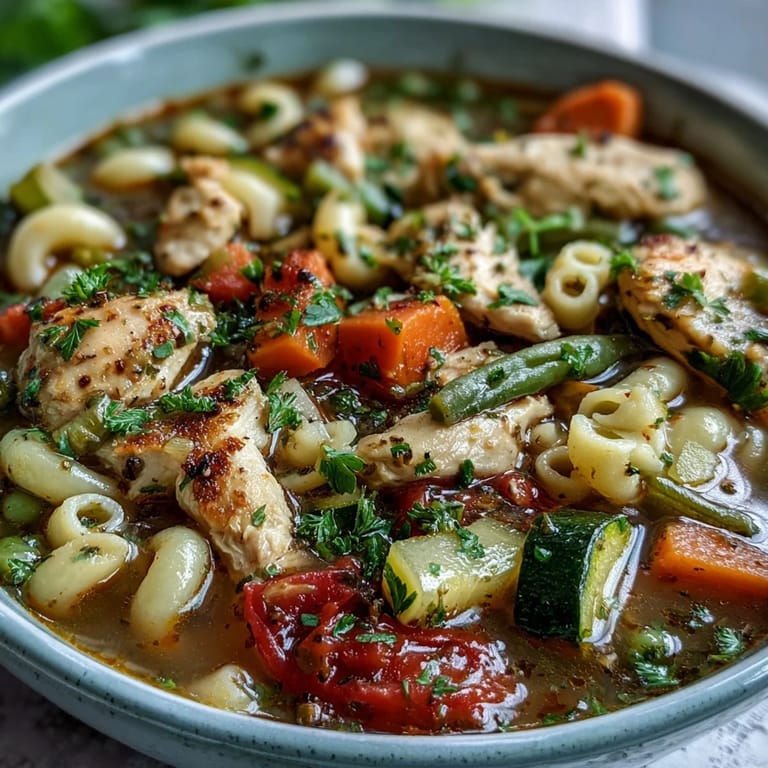
Save There's something about a soup pot simmering on the stove that makes a kitchen feel like home. My neighbor knocked on the door one chilly afternoon, drawn by the smell wafting through our shared wall, and that's when I realized this pasta soup had become something I made without thinking—it just happened naturally whenever the weather turned cool or someone needed comforting. The magic isn't in complexity; it's in how simple ingredients transform into something that feels like a warm embrace in a bowl.
I made this for my kids after a particularly long day, half hoping they'd just eat it without complaint. Instead, my son asked for a second bowl before his first was finished, and my daughter actually requested the green beans—the same green beans she'd been pushing to the side of her plate for months. That's when I knew this soup had crossed from meal into something that mattered.
Ingredients
- Boneless, skinless chicken breasts (2, about 400 g), cut into 1/2-inch cubes: Cutting them into small pieces means they cook quickly and distribute throughout the pot, so every spoonful has protein without needing huge chunks.
- Medium carrots (2), peeled and sliced: They soften beautifully and add natural sweetness that balances the herbaceous notes from thyme and basil.
- Celery stalks (2), sliced: This is the silent flavor builder—it creates a foundation that other ingredients rest on.
- Medium onion (1), finely chopped: The base of everything; I learned years ago that taking time to chop it small means it dissolves into the broth instead of sitting as chunks.
- Garlic cloves (2), minced: Fresh garlic is non-negotiable here because it wakes up the entire pot in less than a minute.
- Medium zucchini (1), diced: It adds volume and vegetables without overpowering, and its mild flavor lets the chicken and herbs shine.
- Green beans (1 cup or 150 g), trimmed and cut into 1-inch pieces: Keep them this size so they stay slightly tender-crisp instead of turning to mush.
- Frozen peas (1 cup or 150 g): They go in at the end and cook just enough to be warm and sweet without losing their pop.
- Diced tomatoes (1 can, 400 g), undrained: The liquid matters as much as the tomatoes themselves—don't drain them.
- Fresh parsley (2 tablespoons), chopped: Add this at the very end for brightness and color; cooking it destroys both.
- Small pasta shapes (1 cup or 100 g), such as ditalini or elbow macaroni: Small shapes are key because they stay suspended rather than sinking to the bottom.
- Low-sodium chicken broth (8 cups or 2 liters): Low-sodium matters because you're in control of the final salt level.
- Olive oil (1 tablespoon): Just enough to prevent sticking without making the soup feel heavy.
- Dried thyme (1 teaspoon): It brings an earthiness that feels intentional without being obvious.
- Dried basil (1 teaspoon): Use dried here rather than fresh because dried basil doesn't fade during the simmering time.
- Bay leaf (1): This gets removed before serving, but it adds a subtle depth that you'd miss if it weren't there.
- Salt and freshly ground black pepper: Always taste before you finish and adjust—everyone's broth is different.
Tired of Takeout? 🥡
Get 10 meals you can make faster than delivery arrives. Seriously.
One email. No spam. Unsubscribe anytime.
Instructions
- Get your foundation going:
- Heat the oil in a large soup pot over medium heat, then add the onion, carrots, and celery. Let them soften for about 5 minutes, stirring occasionally so nothing sticks or browns. You'll notice the kitchen starting to smell right when they're done.
- Bring the garlic alive:
- Once the vegetables have softened, stir in the minced garlic and cook for just 1 minute—that's all it takes before the smell shifts and becomes more aromatic. Longer and it turns bitter, so watch the clock.
- Brown the chicken slightly:
- Add the chicken cubes and cook for 4 to 5 minutes, stirring occasionally. It doesn't need to be cooked through; you're just looking for the outside to lose its raw pink color.
- Layer in everything else:
- Stir in the zucchini, green beans, diced tomatoes with their juices, thyme, basil, bay leaf, salt, and pepper. Mix well so the herbs distribute evenly.
- Bring it to a boil and simmer:
- Pour in the chicken broth and turn the heat up until you see bubbles breaking the surface actively. Once it's boiling, reduce the heat, cover the pot, and let it simmer quietly for 15 minutes—this is when the flavors really start getting to know each other.
- Finish with pasta and peas:
- Uncover the pot, add the pasta and peas, and simmer uncovered for 10 to 12 minutes, stirring occasionally so the pasta doesn't stick to the bottom. The soup is ready when the pasta is tender (not mushy) and the chicken is cooked through.
- Final touches:
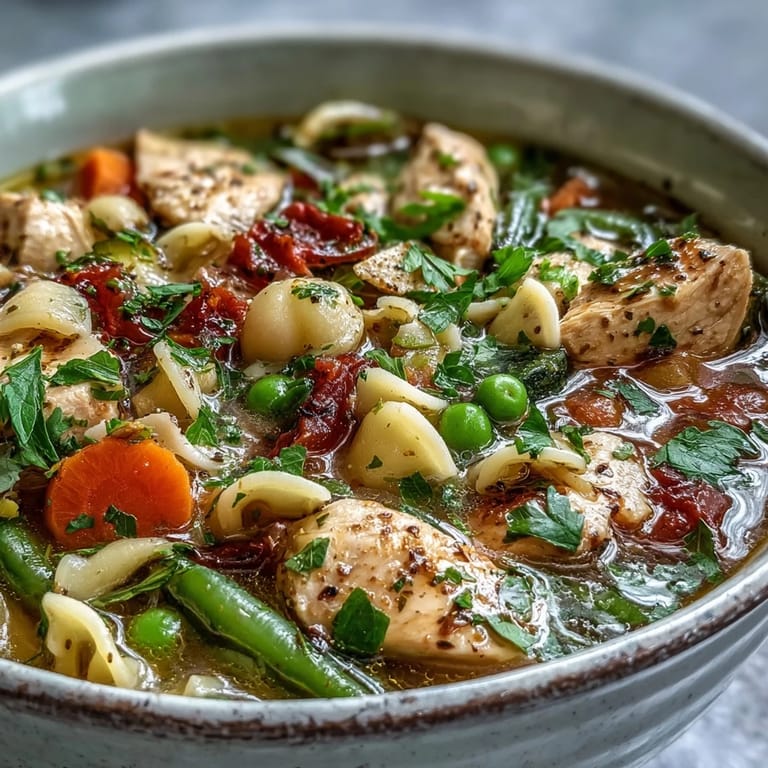
- Remove the bay leaf with a spoon or tongs, stir in the fresh parsley, and taste the broth. Add more salt and pepper if it needs it—trust your palate here, not the recipe.
 Save
Save 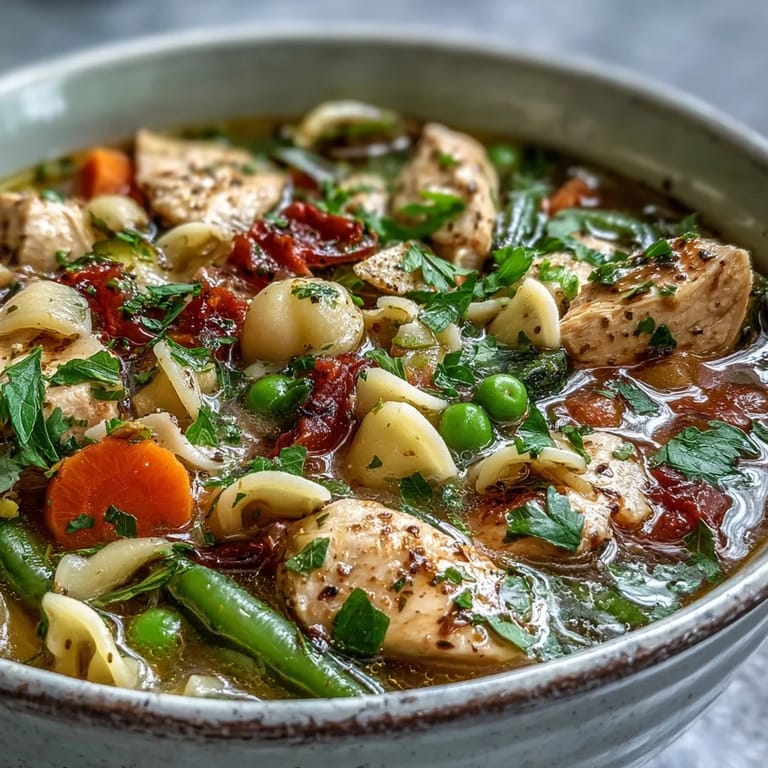 Save
Save This soup has a way of appearing at exactly the right moments—when someone's sick, when the house is too quiet, when you need to prove you care without making a fuss. It's become the thing I make when words aren't enough.
How to Customize Without Losing the Soul
The vegetables here are suggestions, not requirements. I've swapped the zucchini for spinach, replaced green beans with corn, thrown in bell peppers, even used diced summer squash when it was what I had on hand. The formula stays the same: something aromatic as a base, protein in the middle, then softer vegetables that cook faster. The soup adjusts and still tastes right.
For a richer version, use a rotisserie chicken instead of raw chicken breasts—shred it and add it with the pasta instead of cooking raw cubes. This cuts down prep time and adds a different kind of depth, though it tastes noticeably different, almost more restaurant-quality. Some nights call for that; some nights call for the simpler version.
Storage and Reheating Notes
This soup keeps in the refrigerator for 3 or 4 days, and honestly, it tastes better on day two after the flavors have had time to meld properly. You can freeze it too, though the pasta gets slightly softer when thawed. When reheating, add a splash of water or broth because it'll have thickened as it cooled.
What Pairs Alongside
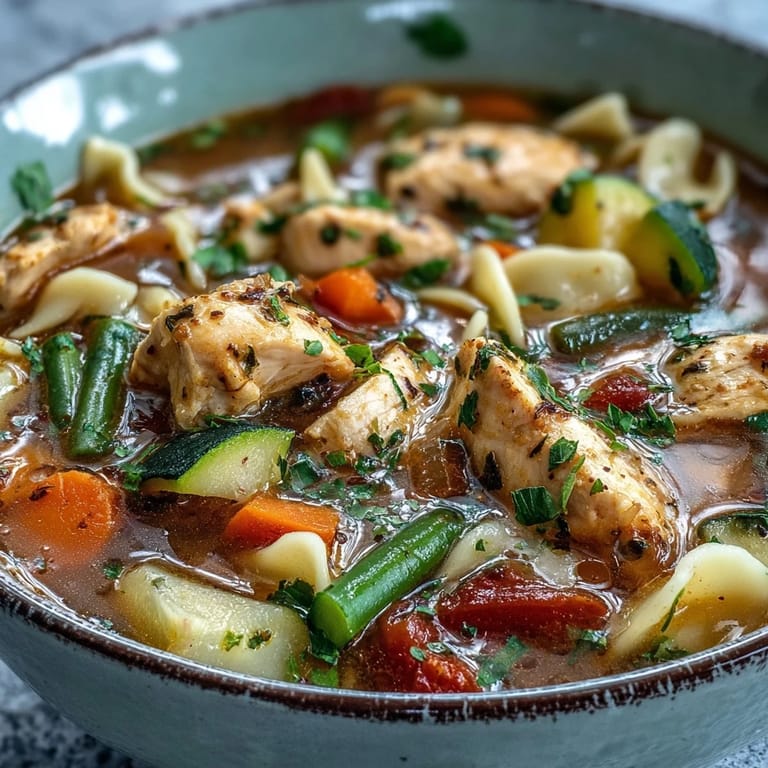
Crusty bread isn't optional in my house—it's there to break into the soup and soak up the broth, which is honestly the best part of the meal. A crisp white wine like Sauvignon Blanc works beautifully if you're making an evening of it, or simply serve it with a simple green salad on the side for something fresher. The soup is hearty enough to be a full meal on its own, but these additions turn it into something that feels special.
- Toast the bread with a little garlic butter to add intentionality to what might otherwise feel like an afterthought.
- A grating of Parmesan over the top adds richness and a salty punch that ties everything together.
- Keep a small bowl of fresh herbs by the table so people can customize their own bowls.
 Save
Save  Save
Save This is the kind of soup you make when you want people to feel cared for without exhausting yourself in the process. It's become a language in my kitchen—proof that simple, thoughtful cooking can say everything that needs saying.
Recipe FAQs
- → Can I use rotisserie chicken instead of raw chicken breasts?
Yes, rotisserie chicken works wonderfully and saves time. Simply shred or dice it and add it when you add the pasta, so it just needs to heat through rather than cook fully.
- → What pasta shapes work best for this soup?
Small pasta shapes like ditalini, elbow macaroni, orzo, or small shells work perfectly. They're easy to eat with a spoon and cook quickly in the broth.
- → How can I make this soup gluten-free?
Simply substitute the regular pasta with your favorite gluten-free pasta variety. Also check that your chicken broth is certified gluten-free.
- → Can I substitute or add different vegetables?
Absolutely! This soup is very versatile. Try adding corn, spinach, bell peppers, or kale. You can swap out zucchini or green beans based on what you have on hand.
- → How should I store leftover soup?
Store in an airtight container in the refrigerator for up to 4 days. Note that the pasta will continue to absorb liquid, so you may need to add extra broth when reheating.
- → Can I freeze this soup?
Yes, but for best results, freeze it before adding the pasta. Cooked pasta can become mushy when frozen and reheated. Add fresh pasta when you reheat the soup.