 Save
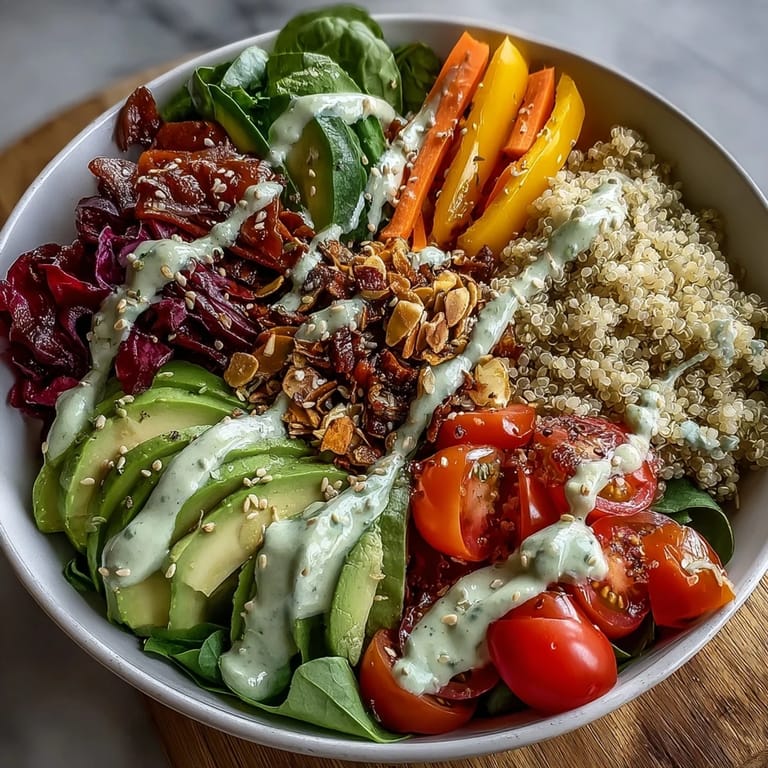
Save My friend Sarah showed up at my apartment one Tuesday with a container of the most stunning bowl I'd ever seen—jewel-toned vegetables arranged like edible confetti over fluffy quinoa. She said she'd been making them for lunch all week and wanted to share her secret. Within one bite, I understood why she'd become slightly obsessed. The tahini dressing tasted like someone had bottled comfort and drizzled it over pure nutrition.
I remember bringing four of these to a potluck where everyone was expecting the usual pasta salad, and watching people's faces light up when they saw the colors. One person actually asked if I'd learned to paint instead of cook. That's when I realized this bowl had transcended food and become conversation.
Ingredients
- Quinoa, rinsed: This tiny grain is a complete protein on its own, which means it's doing real work in your bowl—rinse it to remove the natural coating that tastes slightly bitter.
- Water: Use exactly 2 cups for fluffy, separated grains that won't turn into mush.
- Salt: A half teaspoon goes directly into the cooking water so every grain tastes seasoned from within.
- Cooked chickpeas: These little legumes add protein and a satisfying texture that makes the bowl feel substantial enough for dinner.
- Red cabbage, carrots, cherry tomatoes, bell pepper, cucumber: Layer these raw vegetables for crunch and brightness—their colors actually indicate different nutrients, so aim for as much variety as possible.
- Fresh baby spinach: Adds iron and wilts just slightly when the warm quinoa hits it, creating a pleasant contrast.
- Ripe avocado: Slice this right before serving so it doesn't brown and turn sad-looking.
- Toasted pumpkin seeds and sesame seeds: These provide healthy fats and a pleasant crunch that keeps each bite interesting.
- Tahini: This sesame paste becomes a silky dressing when whisked with lemon and water—it's the soul of the entire bowl.
- Lemon juice: Brightens everything and prevents the avocado from oxidizing if you drizzle some on top.
- Maple syrup or honey: Just enough to balance the tahini's earthiness without making anything sweet.
- Garlic and black pepper: These final touches add depth and complexity that elevate the whole dressing.
Tired of Takeout? 🥡
Get 10 meals you can make faster than delivery arrives. Seriously.
One email. No spam. Unsubscribe anytime.
Instructions
- Start your quinoa with intention:
- Bring water to a rolling boil, then stir in rinsed quinoa and salt—you'll immediately hear it start to pop slightly. Lower the heat, cover the pot, and let it simmer for exactly 15 minutes until the water disappears completely. When you lift the lid, you'll see the tiny spiral tails of the cooked grains peeking out.
- Prep your vegetables while quinoa cooks:
- This is the moment to grab your sharpest knife and channel any lingering stress into thin, even slices—red cabbage paper-thin, carrots into matchsticks, cherry tomatoes halved with their juice pooling on the cutting board. The rhythm of chopping is actually meditative if you let it be.
- Whisk together a dressing that tastes like tahini magic:
- In a small bowl, combine tahini, fresh lemon juice, a drizzle of maple syrup, and minced garlic, then slowly add water while whisking until it reaches a pourable consistency. Taste it and adjust—if it's too thick, water is your friend, if it needs brightness, squeeze more lemon.
- Assemble with color in mind:
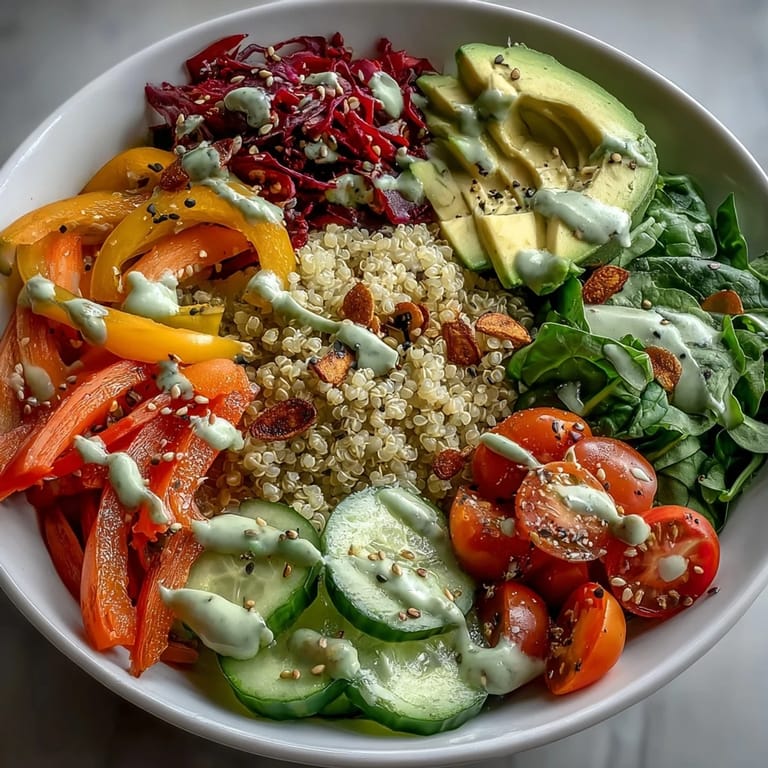
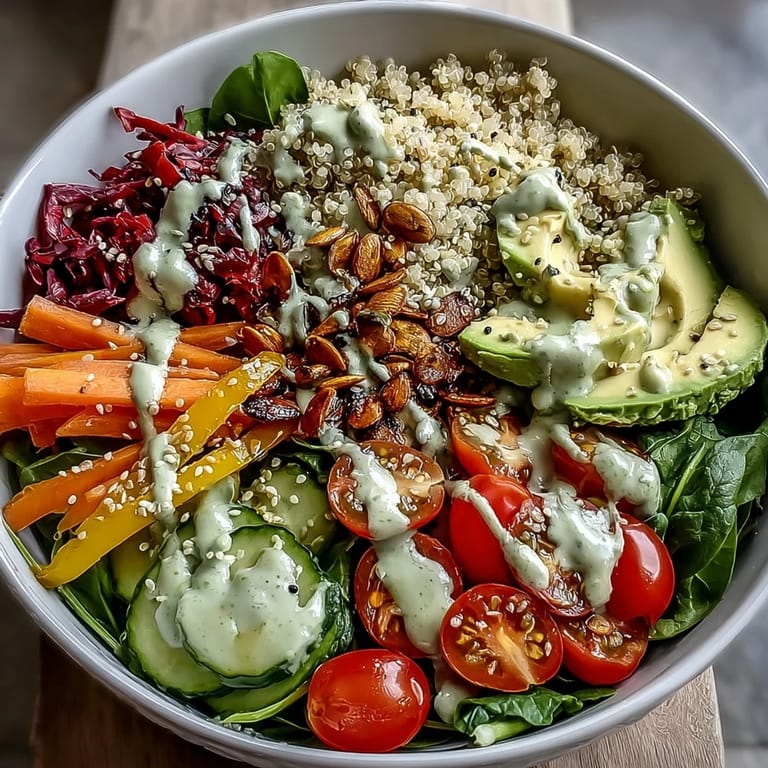
- Divide fluffy quinoa among your bowls, then arrange each vegetable in its own section around the grain base—this isn't just presentation, it's a small gift to yourself and whoever's eating with you. The visual organization somehow makes the food taste better.
- Dress and garnish like you mean it:
- Drizzle tahini dressing generously across the top and scatter seeds everywhere—toasted pumpkin seeds and sesame should catch the light.
 Save
Save There's a moment when I'm arranging vegetables in concentric circles where I stop thinking about nutrition facts and start thinking about the person who's going to eat this bowl. That shift—from task to care—is when cooking becomes something worth doing.
The Magic of a Tahini Dressing
Tahini gets a reputation for being intimidating, but it's honestly just ground sesame seeds that want to be your friend. The moment you whisk it with something acidic like lemon juice, it transforms from dense and heavy into silky and pourable. I learned this by accident when I once added lemon juice instead of water and suddenly had the most luxurious dressing coating everything.
Why Quinoa Changed My Life
Before quinoa, I thought all grains cooked the same way and tasted vaguely similar. Then someone explained that quinoa actually cooks in 15 minutes and contains all nine essential amino acids, and I realized I'd been missing out on an entire category of possibility. Now it's my go-to grain for bowls because it stays fluffy instead of clumping, and it holds up well when you eat leftovers throughout the week.
Making This Bowl Your Own
The beauty of a Buddha bowl is that it's more of a framework than a rigid recipe—you can swap vegetables based on seasons, swap proteins based on preference, and adjust the dressing based on what you're craving. I've made versions with roasted sweet potato in winter, crisp broccoli in spring, and the same bowl with grilled tempeh instead of chickpeas for variety. The structure stays constant while everything else can change.
- If you want spice, add sriracha or chili flakes to the dressing and watch everything come alive.
- Roasted vegetables like sweet potato or Brussels sprouts add warmth and earthiness during cooler months.
- Prep components separately and store them in glass containers—this bowl actually becomes easier to eat throughout the week.
 Save
Save This bowl became my lunch of choice not because it's trendy, but because it genuinely makes me feel better on days when everything feels scattered. There's something about the colors and the textures and the way it nourishes you that makes ordinary Tuesdays feel like you're taking care of yourself.
Recipe FAQs
- → What makes this bowl called a Buddha bowl?
Buddha bowls are named after the round, full appearance resembling Buddha's belly. They typically feature a grain base surrounded by colorful vegetables arranged in sections, with protein and healthy fats completing the nourishing presentation.
- → Can I prepare the components ahead of time?
Yes, you can cook quinoa and chop vegetables up to 2 days in advance. Store components separately in airtight containers. Add avocado and dressing just before serving to maintain freshness and prevent sogginess.
- → What other grains work well in this bowl?
Brown rice, farro, bulgur, or cauliflower rice make excellent alternatives to quinoa. Adjust cooking times accordingly and ensure grains are fluffy before assembling your bowl.
- → How do I store leftovers properly?
Store quinoa, vegetables, chickpeas, and dressing separately in sealed containers. Avocado should be added fresh. When ready to eat, warm the quinoa slightly and assemble with cold vegetables for the best texture contrast.
- → Can I make this bowl protein-rich?
Add grilled tofu, tempeh, or baked falafel alongside chickpeas. You can also include hard-boiled eggs or cooked chicken if you eat animal proteins. Hemp seeds sprinkled on top add extra protein.