 Save
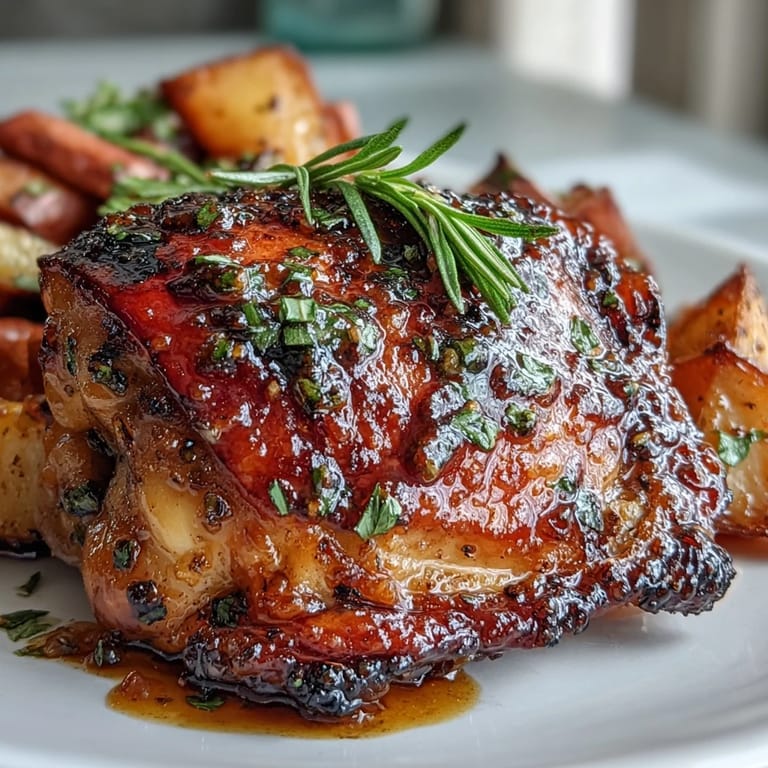
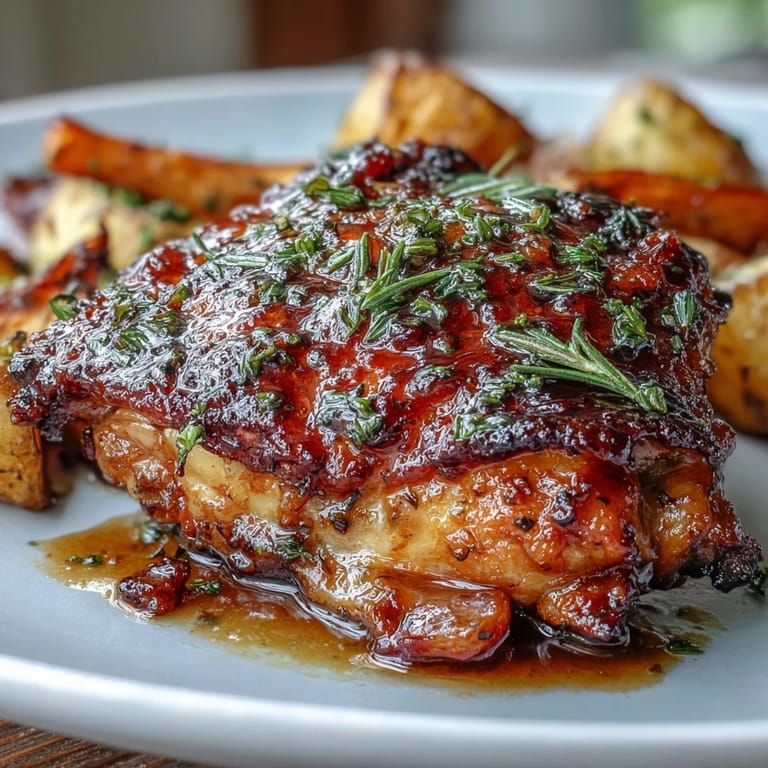
Save My kitchen smelled like caramelizing honey and sharp mustard the afternoon my neighbor stopped by unexpectedly, and I realized I had exactly forty minutes before dinner needed to be on the table. I'd pulled chicken thighs from the freezer that morning without a real plan, and somehow this sheet pan dinner came together so effortlessly that I've made it at least twice a month ever since. There's something deeply satisfying about arranging everything on one pan, brushing on that glossy glaze, and walking away while the oven does the heavy lifting. The chicken emerges golden and tender, the vegetables caramelized at the edges, and the whole kitchen fills with this warm, savory-sweet aroma that makes everyone hungry before they even sit down.
I made this for my mom on a random Tuesday when she was stressed about work, and watching her close her eyes after that first bite and just breathe felt like the whole dinner had already been worth it. She asked for the recipe immediately, texted me a photo before she'd even finished eating, and now it's her go-to when she needs to feel like she's accomplished something in the kitchen without spending hours there. That's when I knew this wasn't just another sheet pan recipe—it was the kind of meal that quietly shows people you care while making them feel capable in their own kitchens.
Ingredients
- Bone-in, skin-on chicken thighs: These stay juicy and forgiving compared to breasts, and that rendered skin gets beautifully crispy against the high heat.
- Dijon and whole grain mustard: The combination gives you sharp, tangy depth from one and textural interest from the other—don't skip the whole grain for smoothness.
- Honey: It caramelizes during roasting and balances the mustard's edge, creating that sweet-savory glaze that makes people ask what's in it.
- Apple cider vinegar: This adds brightness and prevents the glaze from feeling too heavy or cloying.
- Baby potatoes: Halving them ensures they cook through in the time the chicken needs without drying out.
- Carrots: Cut them into thick sticks so they roast evenly and develop those caramelized edges without becoming mushy.
- Fresh or dried thyme: Fresh thyme is gorgeous if you have it, but dried works perfectly and distributes more evenly through the glaze.
- Olive oil: Pat the chicken completely dry before oiling so the skin can crisp rather than steam.
Tired of Takeout? 🥡
Get 10 meals you can make faster than delivery arrives. Seriously.
One email. No spam. Unsubscribe anytime.
Instructions
- Heat your oven and prep your stage:
- Get the oven to 220°C (425°F) and line your sheet pan with parchment paper—this isn't just about cleanup, it prevents sticking and lets the vegetables' bottoms color properly.
- Build the glaze while your oven preheats:
- Whisk together both mustards, honey, apple cider vinegar, minced garlic, and thyme in a small bowl until completely combined and glossy. The smell alone will tell you it's balanced right.
- Season and dry the chicken:
- Pat those thighs completely dry with paper towels—moisture is the enemy of crispy skin. Rub generously with olive oil, salt, and black pepper until every surface glistens.
- Arrange everything on the pan:
- Lay out chicken thighs skin-side up, surrounded by carrot sticks, potato halves, and red onion wedges in a mostly single layer. Leave a little space between pieces so heat can circulate and create that golden color.
- Glaze with intention:
- Brush half the glaze directly onto the chicken, then drizzle the rest over the vegetables and toss everything except the chicken so it gets coated. The chicken skin stays exposed so it can crisp.
- Roast until golden and cooked through:
- Slide the pan into the hot oven for 35 to 40 minutes, stirring the vegetables halfway through so they brown evenly on both sides. The chicken is done when its internal temperature hits 74°C (165°F) and the skin is deep golden.
- Rest and finish:
- Let everything sit for 5 minutes before serving—this lets the chicken relax and stay moist when you cut into it. Scatter fresh parsley over the top if you have it for a fresh brightness against all that richness.
 Save
Save My partner took over cooking duties one evening and made this without telling me, and I walked into the apartment to that smell and immediately felt welcomed home in the way only good food can manage. It became his signature move for impressing people, the meal he'd turn to when he wanted to show care without asking for help or complicated instructions. There's something quietly beautiful about a recipe that gives people confidence in the kitchen.
Why Chicken Thighs Win Every Time
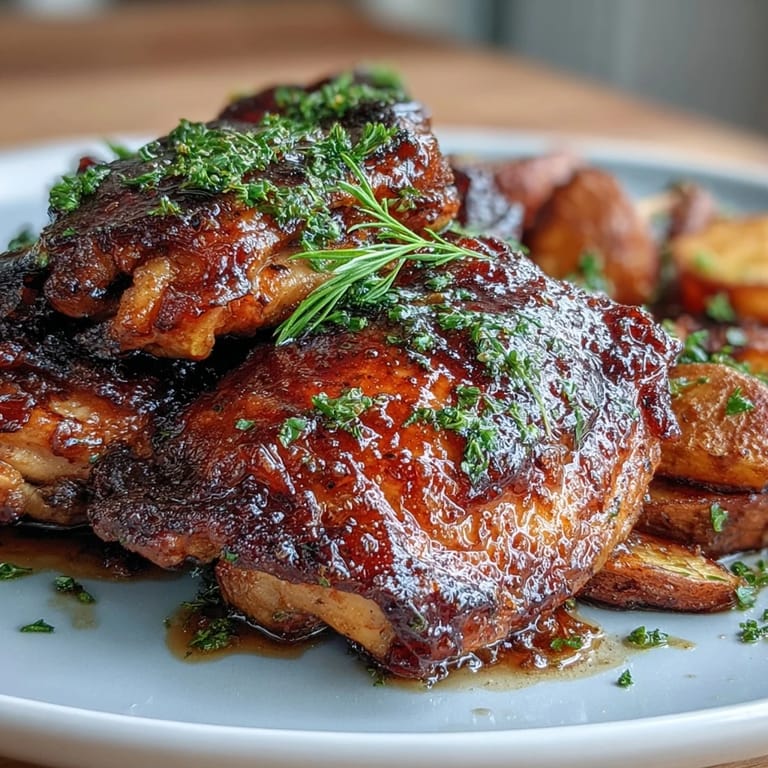
Chicken breasts have their place, but thighs are where sheet pan cooking actually shines. They contain more fat and connective tissue, which means they stay tender and juicy even if your oven runs hot or you accidentally leave them in a few minutes longer. The skin crisps up gorgeously, rendering its fat into the pan where it mingles with the glaze and caramelizes the vegetables below. I've watched breasts turn dry and disappointing on more than one sheet pan, but thighs have yet to let me down.
The Magic of One-Pan Meals
There's something almost meditative about the simplicity of this approach—one sheet, one glaze, everything cooks together and the flavors actually improve by sharing space. Vegetables pick up the savory notes from the chicken fat, the chicken absorbs the sweetness from the caramelizing vegetables, and you get this unified flavor that feels more sophisticated than the individual components deserve. Plus, after years of cooking, I've learned that fewer dishes between you and dinner is everything on a Tuesday night.
Timing, Temperature, and Small Victories
The 35 to 40-minute window is genuinely reliable once your oven is properly preheated, which is why I always give my oven a solid 10 minutes before I load the pan in. Every oven has its quirks—mine runs a bit hot, so I started checking at the 30-minute mark to prevent any surprises. The moment you can smell caramelization without any burnt notes, the moment the skin looks deep golden and the edges of those carrots are catching color, you know it's close to done.
- Use an instant-read thermometer to check the thickest part of the thigh without touching bone—it should read 74°C (165°F) exactly.
- If your vegetables are done but the chicken looks pale, tent the vegetables loosely with foil and give the chicken another few minutes under direct heat.
- Let the pan rest 5 minutes before serving because that small pause keeps everything moist and allows flavors to settle.
 Save
Save This recipe has become my answer to the question of what to make when you want people to feel cared for but you're exhausted. It's the meal that proves you don't need hours in the kitchen or a complicated technique to create something that tastes like you've tried.
Recipe FAQs
- → What type of chicken is best for this dish?
Bone-in, skin-on chicken thighs work best as they stay juicy and develop a crispy skin when roasted.
- → Can I substitute the vegetables?
Yes, parsnips or sweet potatoes can replace carrots, and other root vegetables pair well with the honey mustard glaze.
- → How do I ensure the chicken cooks evenly?
Arrange all ingredients in a single layer and rotate or stir vegetables halfway through roasting for even cooking.
- → Is it necessary to use both Dijon and whole grain mustard?
Using both adds depth and texture to the glaze, balancing smooth and grainy mustard flavors.
- → Can the cooking time be adjusted for chicken breasts?
Yes, substitute breasts but reduce cooking time by about 5–7 minutes to prevent drying out.