 Save
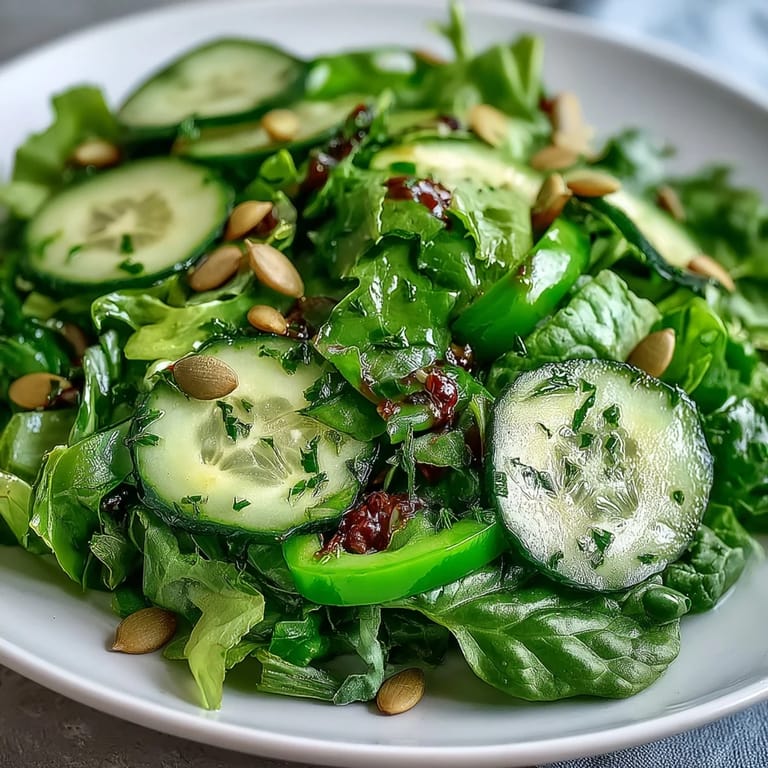
Save There's something almost magical about the moment you bite into a salad that actually tastes alive—crisp, bright, and so vibrant it feels like you're eating pure energy. I discovered this recipe on an ordinary Tuesday afternoon when I realized I'd been making salads the same uninspired way for years, just tossing greens onto a plate without any real thought. That day, I decided to treat it like a proper meal instead of a side, and everything changed the moment I added that zesty vinaigrette and actually took time to slice vegetables thin enough to taste their sweetness. This Glowing Green Salad became my answer to those moments when you want something that nourishes you without making you feel like you're eating "health food."
I made this for my friend Sarah who'd been on a strict diet, and she sat there quietly for a moment after the first bite, then just said, "This is what I've been missing." That's when I realized this wasn't just a salad—it was proof that healthy eating doesn't have to taste like punishment. We ended up sharing it on her back porch on a warm evening, and she made me promise to teach her how to make the vinaigrette because she wanted to recreate that moment at home.
Ingredients
- Mixed baby greens (6 cups): Use a combination of spinach, arugula, kale, and romaine—the variety keeps things interesting and each green brings its own texture and subtle flavor.
- Cucumber (1, thinly sliced): This is your hydration hero; slice it thin so it stays tender and picks up the vinaigrette beautifully.
- Celery (1 cup, thinly sliced): Don't skip this—it adds a crisp snap that grounds the whole salad and prevents it from feeling too soft.
- Green bell pepper (1 cup, julienned): Cut it into thin matchsticks so you get sweet pepper in every bite without overwhelming the other flavors.
- Zucchini (1 cup, thinly sliced): Use a mandoline or vegetable peeler if you have one; thin slices make all the difference in texture.
- Fresh parsley (1/2 cup, chopped): This is the ingredient that makes people ask what's in it—it adds a subtle herbal brightness that ties everything together.
- Extra virgin olive oil (3 tablespoons): Quality matters here since it's not being cooked; find one you actually enjoy tasting.
- Fresh lemon juice (2 tablespoons): Always fresh—bottled just doesn't have the same spark.
- Apple cider vinegar (1 tablespoon): This adds depth and a gentle tang that makes the greens pop.
- Dijon mustard (1 teaspoon): Acts as an emulsifier and adds a whisper of sophistication.
- Sea salt (1/2 teaspoon): Enhances every flavor and brings the vegetables to life.
- Freshly ground black pepper (1/4 teaspoon): Always grind it fresh; pre-ground loses its bite.
- Pumpkin or sunflower seeds (1/4 cup, optional): Toasts the salad from simple to substantial if you want that extra crunch and earthiness.
Tired of Takeout? 🥡
Get 10 meals you can make faster than delivery arrives. Seriously.
One email. No spam. Unsubscribe anytime.
Instructions
- Prepare your vegetables:
- Wash everything thoroughly and pat the greens dry—water on the leaves will dilute your vinaigrette. Slice the cucumber, celery, and zucchini as thin as you can manage without your fingers getting in the way; a sharp knife and steady hand make this feel less like a chore.
- Build your salad base:
- Toss all your greens and vegetables together in a large bowl, letting the colors mix and create that beautiful visual that makes you want to eat it immediately. This is the moment where it starts to look like something special.
- Make the magic vinaigrette:
- Whisk the olive oil, lemon juice, apple cider vinegar, mustard, salt, and pepper together in a small bowl until it's creamy and emulsified. You'll see it transform from separate ingredients into something cohesive—that's when you know it's ready.
- Dress and serve:
- Pour the vinaigrette over your salad and toss gently but thoroughly, making sure every leaf gets coated with that bright dressing. Sprinkle seeds on top if you're using them, and serve immediately while everything is still crisp and the flavors are singing.
 Save
Save There's a quiet moment when you're eating a salad this good where you stop scrolling through your phone and actually taste what's in front of you. It happened to me one morning when I made this for breakfast instead of lunch, and somehow the bright flavors felt even more necessary at 7 a.m. than they did at noon—like my body was thanking me for actually listening to what it needed.
The Art of the Perfect Slice
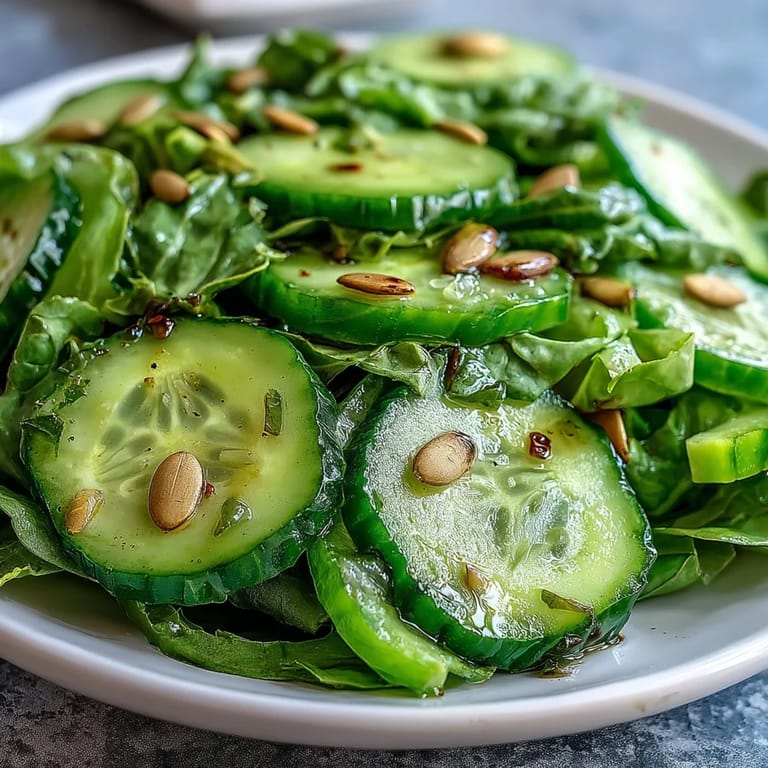
I used to think salads were boring because I wasn't paying attention to technique, and then I realized that the size of your cuts completely changes how the salad feels in your mouth. Thin slices mean the vegetables cook slightly in the acid of the vinaigrette, becoming tender but not limp; they also pick up flavors faster and hold the dressing better. A mandoline made me fall in love with this salad because suddenly those vegetables became almost delicate, like ribbons instead of chunks. If you don't have a mandoline, a sharp chef's knife and a little patience will get you there—and honestly, there's something meditative about the repetition of slicing when you're not in a rush.
Why the Vinaigrette is Non-Negotiable
I learned the hard way that you can't just dump oil and vinegar on greens and call it a dressing—the balance is everything, and that Dijon mustard is doing more work than you'd think. It acts as an emulsifier, which means it holds the oil and acid together instead of letting them separate and slide off your vegetables. The lemon juice brings brightness while the apple cider vinegar adds depth, and together they create something that tastes almost sweet even though there's no sugar in it. I've made this with just lemon and it was fine, but with both acids it becomes something you want to drink off the bottom of the bowl.
Variations and Moments of Inspiration
The beauty of this salad is that it's a foundation waiting for whatever you're feeling that day or whatever's in your crisper drawer. I've added avocado on days when I needed something more substantial, fresh mint when I wanted it to feel almost dessert-like and cooling, and even a handful of microgreens when I was trying to impress someone at a dinner party. The original recipe is perfect, but it's also permission to play around—and some of my best kitchen discoveries have come from asking "what if I added this" instead of strictly following instructions. Add your seeds, skip them, swap lemon for lime, throw in some cucumber seeds if they're not too bitter that day—this salad welcomes interpretation.
- Avocado slices make it creamy without needing any extra dressing.
- Fresh mint or dill brings an herbal note that changes the whole vibe.
- A squeeze of lime juice instead of lemon creates a completely different but equally delicious flavor profile.
 Save
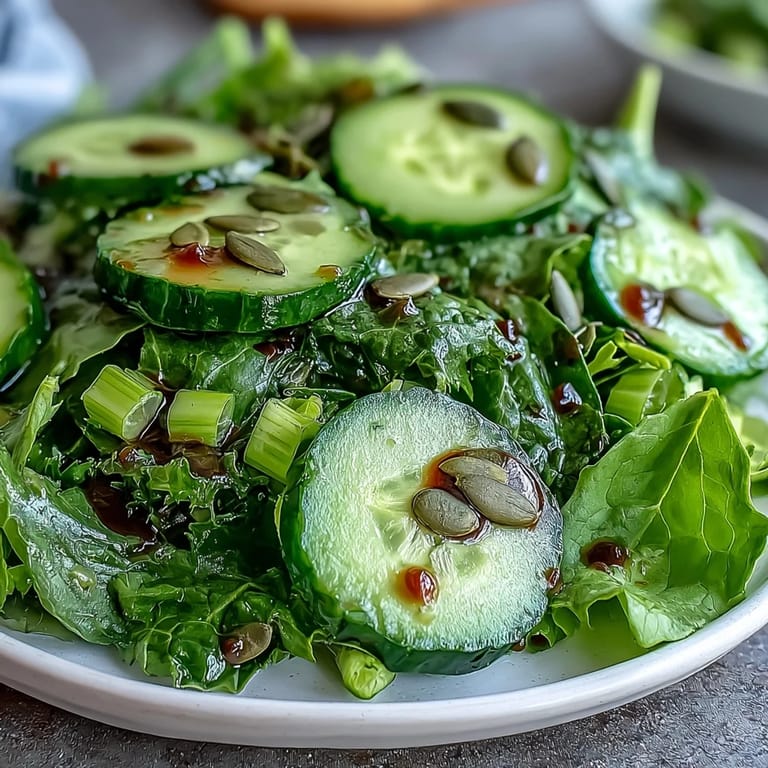
Save This salad has become my answer to almost every occasion—when I'm not sure what to eat, when I need energy, when I want to feel good about my choices. It's proof that the simplest things, done with intention and good ingredients, become the ones you come back to.
Recipe FAQs
- → What greens work best in this salad?
Mixed baby greens like spinach, arugula, kale, or romaine provide varied textures and flavors. Spinach offers tender leaves, arugula adds peppery notes, kale brings hearty crunch, and romaine delivers refreshing crispness.
- → Can I prepare the vinaigrette in advance?
Yes, whisk together the olive oil, lemon juice, vinegar, mustard, salt, and pepper up to 3 days ahead. Store in an airtight container in the refrigerator and bring to room temperature before tossing with the greens.
- → How do I keep the salad crisp for meal prep?
Layer ingredients in a jar starting with the vinaigrette at the bottom, followed by sturdy vegetables like cucumber and celery, then place greens on top. Store refrigerated for up to 2 days and toss when ready to eat.
- → What protein additions complement these flavors?
Grilled chicken, baked salmon, or hard-boiled eggs pair beautifully. For plant-based options, try chickpeas, edamame, or hemp seeds to boost protein while maintaining the fresh profile.
- → Can I substitute the lemon juice?
Lime juice works well for a tropical twist, or use white wine vinegar for a milder acidity. Apple cider vinegar can replace the lemon entirely for a slightly sweeter, fermented note that still provides brightness.
- → What vegetables can I add for more variety?
Snow peas, shredded Brussels sprouts, or fresh fennel bring extra crunch. Thinly sliced radishes add peppery bite, while diced avocado contributes creaminess that balances the crisp vegetables and tangy dressing.