 Save
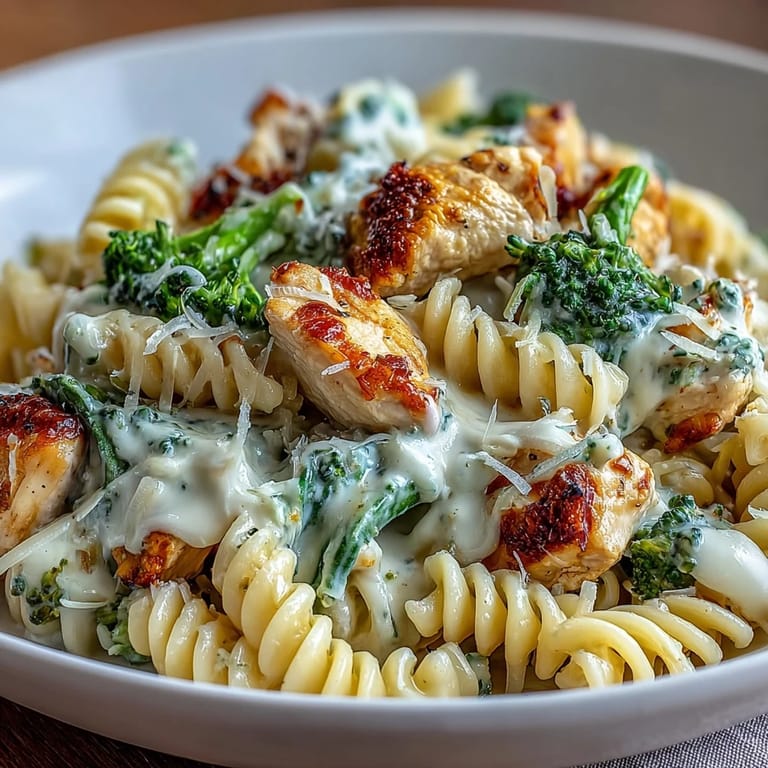
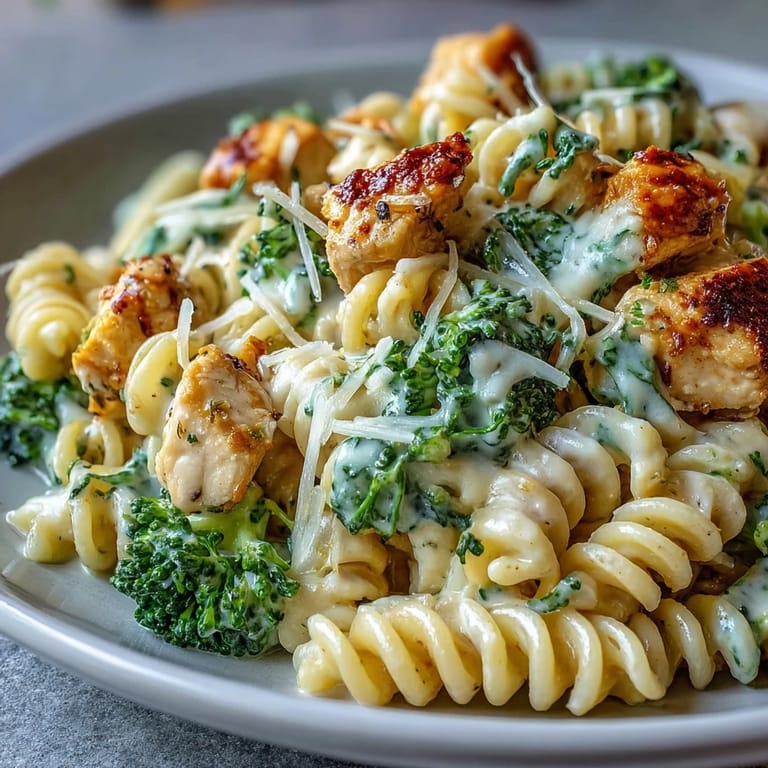
Save There's a Wednesday evening I keep coming back to when my partner mentioned craving something that tasted like garlic Parmesan soup but could actually fill you up. I had chicken thawing on the counter, broccoli in the crisper drawer, and about thirty minutes before we needed to eat. What came together that night—pasta cooked right in the creamy sauce, chicken pieces that stayed impossibly tender, and that sharp Parmesan funk cutting through the richness—became the dinner we now make when we're tired but hungry.
I made this for a friend who'd just moved into her first apartment and had exactly three pans. She called me after dinner saying she'd eaten it three times that week because it actually made her feel like she could cook something restaurant-quality at home. That's when I realized this dish does something quiet but important—it builds confidence.
Ingredients
- Boneless, skinless chicken breasts (2 medium, about 400 g, diced): Cutting them into bite-sized pieces ensures they cook through quickly and distribute evenly throughout the pasta instead of becoming dense.
- Broccoli florets (2 cups, about 200 g): Keep the pieces moderate in size so they soften just as the pasta reaches that perfect al dente moment.
- Garlic (3 cloves, minced): Don't skip the mincing step—those tiny pieces bloom into the cream and create the backbone of the whole dish.
- Yellow onion (1 small, finely chopped): The sweetness balances the saltiness of the Parmesan and adds depth without making itself known.
- Short pasta (300 g or 10 oz—penne, fusilli, or rotini): The shape matters because the grooves and curves trap sauce; long pasta slides through too cleanly.
- Whole milk (1 cup or 240 ml): This is where the creaminess begins; it's gentler than going straight to heavy cream alone.
- Grated Parmesan cheese (1 cup or 100 g): Freshly grated tastes sharper and melts more smoothly than pre-shredded versions.
- Unsalted butter (2 tbsp or 30 g): This browns the chicken and adds richness that oil alone can't deliver.
- Heavy cream (1/2 cup or 120 ml): Added at the end so it doesn't break under high heat; it's the final flourish that makes everything silky.
- Olive oil (2 tbsp): Use it to sauté the onion and garlic, keeping flavors building from the beginning.
- Low-sodium chicken broth (1 1/2 cups or 360 ml): This becomes the cooking liquid for the pasta, infusing it with savory depth instead of plain water.
- Dried Italian herbs (1/2 tsp): A small amount prevents the sauce from tasting like an herb garden; you want the garlic and cheese center stage.
- Salt and freshly ground black pepper: Taste as you go because the Parmesan adds saltiness too.
Tired of Takeout? 🥡
Get 10 meals you can make faster than delivery arrives. Seriously.
One email. No spam. Unsubscribe anytime.
Instructions
- Start with the chicken:
- Heat olive oil and butter together in a large, deep skillet over medium heat until the butter foams slightly and smells nutty. Spread the diced chicken in a single layer, season with salt and pepper, and let it sit for a minute before stirring—this creates a golden crust that keeps the meat flavorful.
- Build the flavor base:
- Once the chicken is cooked through and light golden (about five to six minutes), remove it to a plate. In the same skillet, add the chopped onion and cook gently until it turns translucent and slightly sweet-smelling, roughly two minutes. Add the minced garlic and cook for just thirty seconds—any longer and it becomes bitter.
- Cook the pasta in sauce:
- Stir the uncooked pasta right into the skillet, coating each piece lightly in the oil. Pour in the chicken broth, milk, and Italian herbs, then bring the mixture to a boil, stirring occasionally. Reduce the heat to a simmer, cover the skillet, and cook for eight minutes, stirring every couple of minutes so the pasta doesn't stick to the bottom.
- Add the broccoli:
- After eight minutes, add the broccoli florets, cover the skillet again, and cook for another five to six minutes until the pasta is tender and the broccoli is bright green with a slight bite to it. The pasta should be approaching doneness and the liquid should be mostly absorbed.
- Finish with cream and cheese:
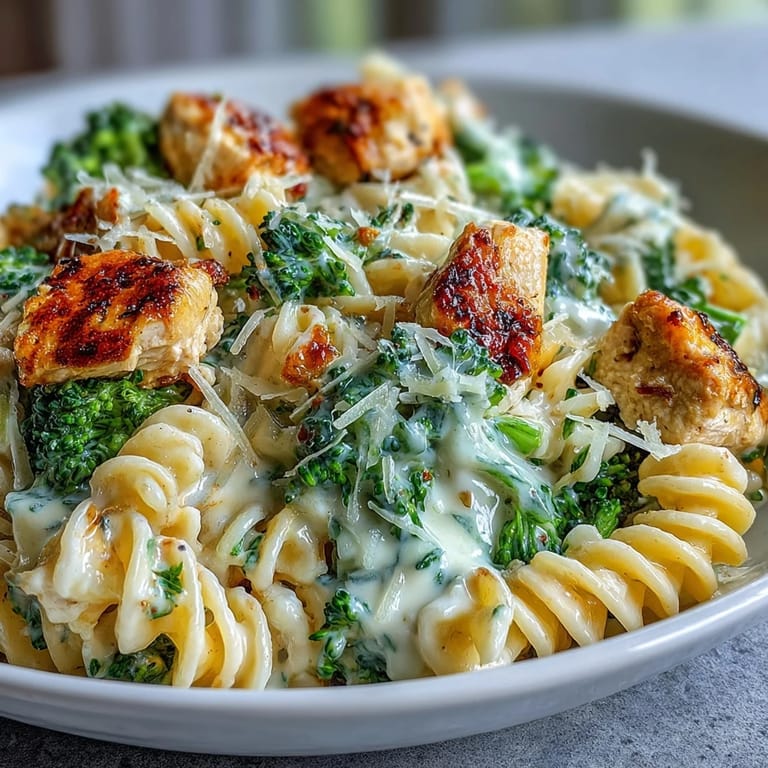
- Lower the heat to low, then pour in the heavy cream and add the grated Parmesan cheese, stirring gently until the cheese melts completely and the sauce becomes thick and silky. Return the cooked chicken to the skillet, stir everything together, and cook for two more minutes just to warm the chicken through.
- Taste and serve:
- Give it a final taste and adjust the salt and pepper if needed—remember the Parmesan is already salty. Scatter fresh parsley and extra Parmesan over the top if you have them, and serve immediately while the sauce is still creamy.
 Save
Save The first time someone asked me for the recipe, they said it tasted like comfort but also like I'd actually put thought into it. That's the magic of this dish—it feels effortless to eat but thoughtful in its construction, like you're being taken care of by someone who knows how to cook but doesn't need to show off about it.
Ways to Make It Your Own
This recipe is a solid foundation, but it loves flexibility. I've swapped the broccoli for fresh spinach that wilts into the cream, or added a handful of peas because my niece refuses anything green unless it's buried in sauce. One winter evening I added sun-dried tomatoes on impulse and it shifted the whole thing into a slightly more Mediterranean direction. The chicken broth is the real hero here because it carries whatever you decide to add—just remember that vegetables with more moisture, like zucchini, might release liquid that thins the sauce.
Timing and Pacing
The actual hands-on work for this dish happens in the first five minutes; after that, you're mostly waiting and stirring. I use this time to set the table, put on music, or pour a glass of wine. The beauty of cooking pasta in the sauce is that it forces you to slow down—you can't just rush through assembly at the end because the pasta doesn't finish in a separate pot somewhere off to the side. Everything has to happen in sequence in one place, which actually makes the whole experience less frantic than it sounds.
Pairing and Serving
A crisp white wine like Pinot Grigio cuts through the richness perfectly if you're drinking wine with dinner. If not, some crusty bread for soaking up the extra sauce is almost mandatory. Serve this straight from the skillet if you're feeling relaxed, or plate it carefully if you want it to look intentional. The leftovers actually improve after a day in the refrigerator because the flavors meld, though the sauce might be thicker—just add a splash of milk when you reheat and stir gently over low heat.
- Make sure your skillet has a lid, or use foil in a pinch, because the steam helps cook the pasta evenly.
- Taste constantly during the last few minutes because seasoning is personal and your palate knows better than any recipe.
- This feeds four people generously or two people with leftovers, which is honestly the ideal outcome.
 Save
Save This pasta has become the dinner I reach for when life is moving too fast and I still want to eat something that feels like it was made with intention. It's proof that simple ingredients, cooked in the right order, can taste like restaurant food without the stress or the price tag.
Recipe FAQs
- → Can I use pre-cooked chicken?
Yes, rotisserie chicken or leftover cooked chicken works perfectly. Add it during step 5 when stirring in the cream and cheese, just long enough to heat through—about 2 minutes.
- → What pasta shapes work best?
Short pasta varieties with ridges or curves hold sauce beautifully. Penne, fusilli, rotini, or even gemelli are excellent choices that capture the creamy garlic Parmesan coating in every bite.
- → Can I make this lighter?
Substitute whole milk with low-fat milk and reduce heavy cream to 2 tablespoons. The sauce will still be creamy thanks to the melted Parmesan and starch from the pasta.
- → What vegetables can I substitute?
Fresh spinach, peas, asparagus pieces, or cauliflower florets all work well. Add delicate vegetables like spinach at the very end to avoid wilting.
- → Why cook pasta directly in the skillet?
Cooking pasta in the cooking liquid creates a thicker, creamier sauce naturally as the starch releases into the broth. This technique eliminates the need for draining and results in more cohesive, flavorful coating.
- → Can I make this dairy-free?
Use unsweetened almond or oat milk instead of dairy milk, coconut cream or cashew cream in place of heavy cream, and nutritional yeast or vegan Parmesan alternative for the cheesy element.