 Save
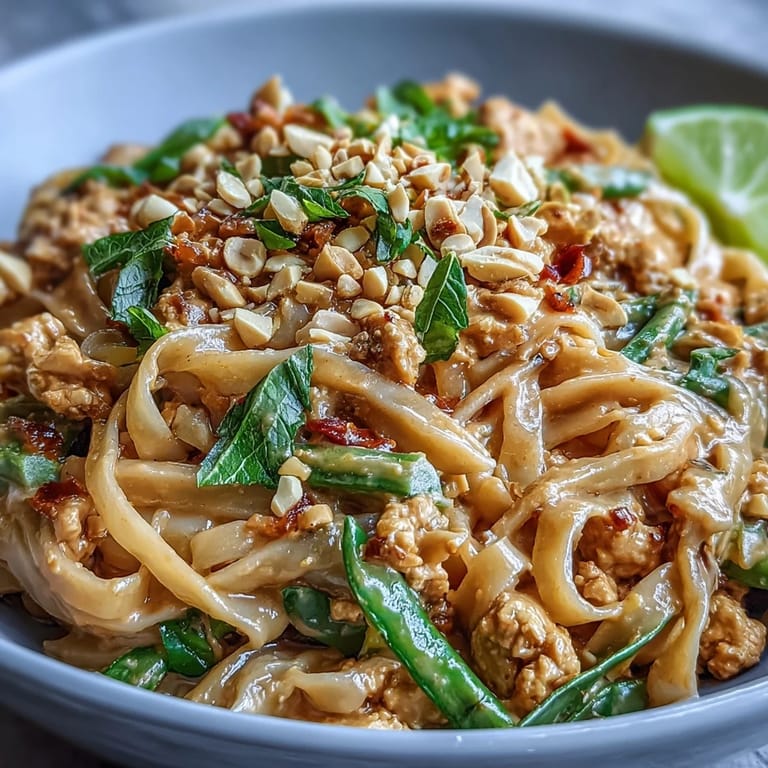
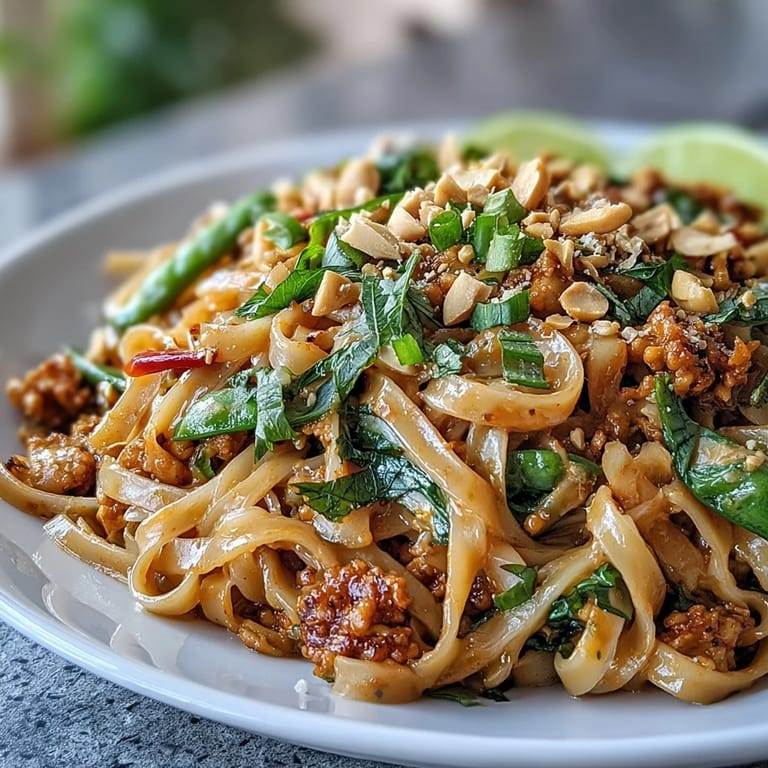
Save One Thursday evening, my kitchen filled with the most intoxicating smell—toasted sesame oil meeting fresh ginger—and I realized I'd been craving something warm, creamy, and decidedly un-fussy. I had ground chicken thawing, a half-empty jar of peanut butter, and the kind of restless energy that needed feeding fast. What emerged from that spontaneous moment became something I keep making on nights when I want restaurant-quality flavor without the restaurant-quality fuss. These noodle bowls arrive at the table steaming and silky, looking far more composed than the cheerful chaos it took to create them.
I made this for my neighbor who mentioned offhand that she loved Thai food but never ordered it because takeout made her anxious about cross-contamination with peanuts. Watching her face when I set down a steaming bowl she could actually trust, topped with those roasted peanuts she thought she'd have to skip, reminded me that food isn't just about satisfying hunger—it's sometimes about giving someone permission to enjoy something they thought was off-limits.
Ingredients
- Ground chicken (1 lb): Reaches perfect tenderness when you break it into small pieces as it browns; don't crowd the pan or it'll steam instead of getting that golden edge.
- Dried wide rice noodles (10 oz): These absorb sauce beautifully without turning mushy, and you add them dry for maximum flavor absorption—it's the secret to why this tastes so cohesive.
- Red bell pepper, carrots, snap peas: This trio gives you color, crunch, and nutrients all in one go; slice the pepper thin so it softens in the time everything needs to cook.
- Garlic and ginger: These two create the aromatic foundation that makes your kitchen smell like you've been cooking all day; don't skip the mincing step or you'll get tough chunks.
- Creamy peanut butter: The soul of this dish; use the good stuff if you can, or whisk it smooth with a splash of broth first if it's too thick.
- Soy sauce, hoisin, rice vinegar, honey: These layers of flavor prevent the sauce from being one-note; the vinegar cuts through richness while honey adds subtle sweetness.
- Toasted sesame oil: A little goes a long way; its nutty depth elevates everything, but add it after cooking so the heat doesn't mute it.
- Sriracha or chili garlic sauce: Adjust this to your heat tolerance, knowing it builds slightly as the dish sits.
- Chicken or vegetable broth: This is what transforms the sauce from thick to creamy; low-sodium lets you control the salt.
- Lime juice: The final flourish that brightens everything and prevents the sauce from tasting heavy.
- Roasted peanuts, cilantro, green onions: These garnishes aren't optional—they add texture and freshness that make each bite interesting.
Tired of Takeout? 🥡
Get 10 meals you can make faster than delivery arrives. Seriously.
One email. No spam. Unsubscribe anytime.
Instructions
- Brown the chicken with purpose:
- Heat oil in your skillet over medium-high heat and let it shimmer for a moment. Add the ground chicken, then resist the urge to stir immediately—let it sit for a minute so it gets golden, then break it into small pieces as it browns. You're looking for no pink remaining and some caramelized edges, which takes about five minutes.
- Build the aromatics:
- Once the chicken is done, push it to the side and add minced garlic, grated ginger, and the white parts of the green onions to the empty space. The sizzle will tell you everything is happening, and after one minute your whole kitchen transforms into something that smells expensive.
- Add color and crunch:
- Toss in your bell pepper, carrots, and snap peas, stirring everything together. Two to three minutes of cooking here means the vegetables soften just enough to release their sweetness while staying snappy; you're not going for tender, you're going for just-barely-there.
- Scatter the noodles like you mean it:
- Spread the dry rice noodles evenly over all the vegetables and chicken. This direct contact between noodles and pan is what makes them absorb flavor instead of just sitting in sauce.
- Whisk the sauce into submission:
- In a separate bowl, whisk together your peanut butter, soy sauce, hoisin, rice vinegar, honey, sesame oil, sriracha, and broth until completely smooth. If the peanut butter resists, warm the broth slightly first or whisk it longer—this step prevents lumpy sauce.
- Let it simmer and soften:
- Pour that beautiful sauce over everything and bring it to a simmer. Cover the pan and cook for four to six minutes, stirring occasionally, until the noodles are tender and have drunk in most of the sauce; they should look creamy and connected, not swimming.
- Bring it back together:
- Return the chicken to the pan, add the lime juice, and toss everything over low heat for two to three minutes until it's silky and unified. This is where it stops being ingredients and becomes a dish.
- Finish with what matters:
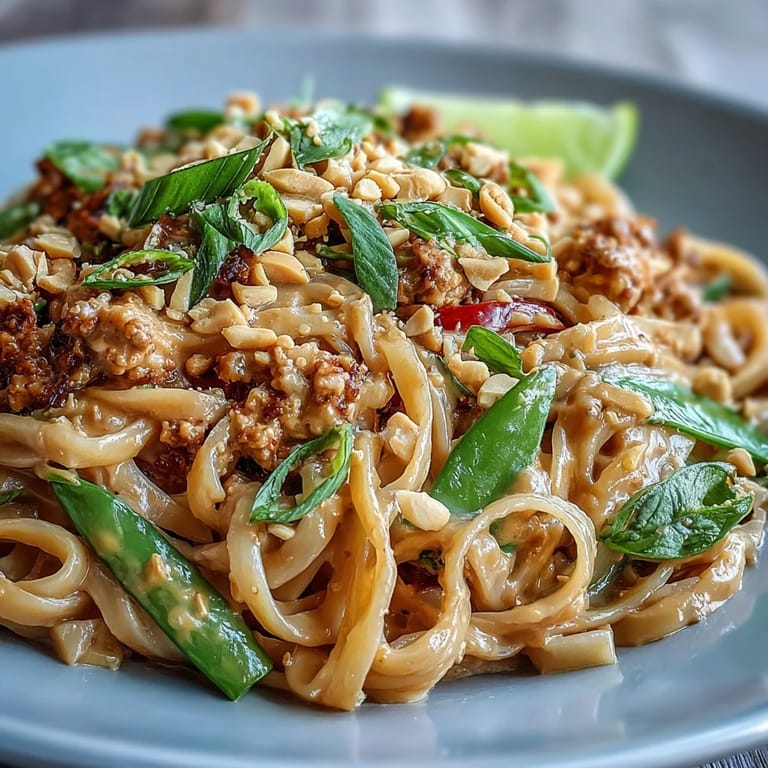
- Serve into bowls and top with chopped roasted peanuts, fresh cilantro, reserved green onion tops, and lime wedges. Let people squeeze their own lime—it gives the dish a custom touch that feels special.
 Save
Save The magic happens in the final minute, when you're standing there with the lid off, steam rising, and suddenly everything that seemed like separate components becomes this cohesive, creamy thing that tastes like someone who knows Thai food cooked it. That's the moment I always smile, because it never feels like luck—it feels intentional.
Substitutions That Work
Ground turkey cooks exactly like chicken and gives you an ever-so-slightly leaner result; crumbled extra-firm tofu becomes silky in this sauce and picks up every flavor around it, making it the vegetarian version that doesn't feel like you're missing anything. Mushrooms—cremini or shiitake chopped small—add an umami depth that enriches the peanut sauce. If you're avoiding soy sauce, tamari swaps in seamlessly, and for hoisin there are gluten-free versions now that don't compromise on that sweet-savory depth.
The Heat Question
I keep sriracha in the sauce base rather than only as garnish because the heat distributes throughout instead of just shocking your first bite. Start with one teaspoon and taste before adding more; the sauce actually builds heat as it sits, so what seems mild while you're cooking might surprise you ten minutes later. For people who like serious spice, an extra drizzle of chili oil at the end or a sprinkle of chili flakes adds layers without making the entire dish nuclear.
Serving and Storage Wisdom
This tastes best served immediately while the noodles are still tender and the vegetables haven't given up all their crunch. It does keep beautifully in the refrigerator for three days, though the noodles will have absorbed even more sauce, making it denser the next day—not worse, just different, and honestly perfect for grabbing at lunch when you want something that tastes finished and complete.
- Reheat gently over low heat with a splash of broth or water to loosen the noodles back up.
- Prep your sauce and vegetables the night before if you want dinner on the table in fifteen minutes flat.
- Make a double batch if you're feeding more than four; it scales beautifully and freezes well for up to a month.
 Save
Save This is the kind of dinner that makes you feel capable in the kitchen without demanding anything of you except attention and decent ingredients. It's become the meal I make when I want to cook something that tastes like care.
Recipe FAQs
- → Can I make this dish gluten-free?
Yes, substitute tamari for soy sauce and verify your hoisin sauce is gluten-free. Most rice noodles are naturally gluten-free, making this an easy adaptation.
- → What protein alternatives work well?
Ground turkey, crumbled tofu, or sliced chicken breast all pair beautifully with the peanut sauce. Adjust cooking time accordingly—tofu absorbs flavors quickly, while sliced chicken may need a few extra minutes.
- → How spicy is this dish?
With 1-2 teaspoons of Sriracha, it offers mild to medium heat. Increase chili garlic sauce or add red pepper flakes for more spice. The creamy peanut sauce helps temper the heat, making it approachable for most palates.
- → Can I prepare this ahead?
The sauce can be whisked together and stored refrigerated for up to 5 days. Chop vegetables in advance, but cook the dish fresh for best noodle texture. Leftovers reheat well with a splash of broth.
- → What noodles work best?
Wide rice noodles are traditional, but thin rice noodles, soba, or even spaghetti work. Adjust cooking time slightly—wider noodles need more liquid and longer simmering to become tender.