 Save
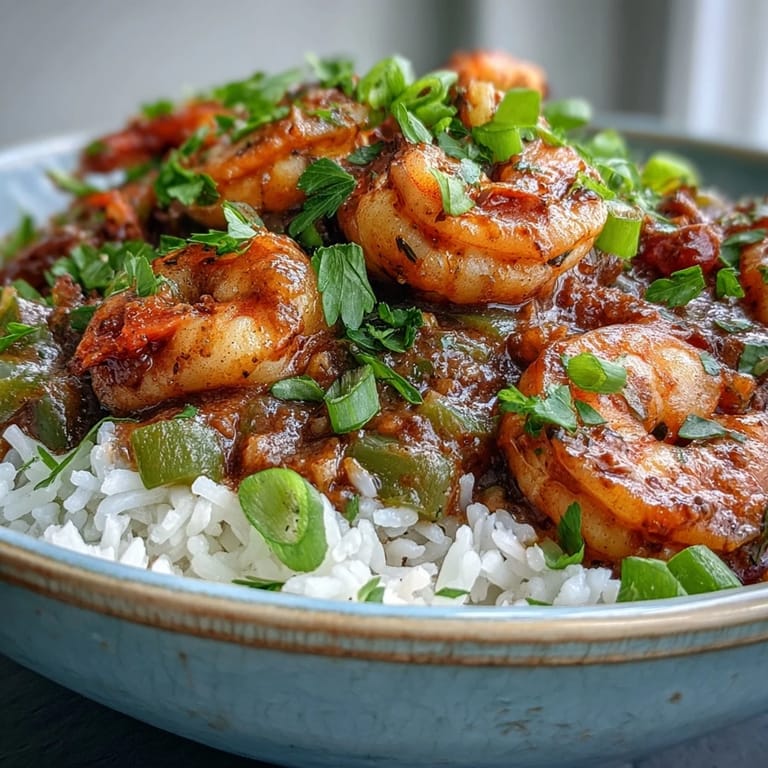
Save My neighbor Adele shuffled over one humid July evening with a pot still warm and a look that said trust me. She ladled étouffée over my rice without asking, and I tasted something I didn't have words for yet: butter-dark roux, shrimp sweet as the Gulf, heat that crept up slow. I asked for the recipe three times before she finally scribbled it on a napkin. That napkin is still tucked in my recipe box, stained and soft.
I made this for my brother's birthday last spring, doubling the batch because I knew he'd want seconds. He sat at the counter, quiet for once, chasing shrimp around his bowl with a piece of bread. When he looked up, he just said, this is the one. Now it's the dish he asks for every time he visits, and I never say no.
Ingredients
- Vegetable oil and all-purpose flour: These two build the roux, the soul of étouffée, so use a heavy pot and stir without stopping or it'll scorch on you.
- Onion, green bell pepper, celery: The holy trinity of Cajun cooking, they soften into sweetness and give the sauce its backbone.
- Garlic: Minced fine and added late so it blooms without burning, just a minute in the heat is enough.
- Shrimp: I prefer wild-caught gulf shrimp for their snap and sweetness, but any good quality shrimp works if you peel and devein them yourself.
- Seafood stock: Homemade is lovely, but a good store-bought version saves time and still delivers plenty of flavor.
- Worcestershire sauce: Just a tablespoon adds a quiet umami depth that makes people wonder what your secret is.
- Cajun seasoning and cayenne pepper: Adjust these to your own heat tolerance, I like enough kick to make my lips tingle but not so much that it drowns the shrimp.
- Bay leaf: Don't skip it, the herbal note it leaves behind is subtle but necessary.
- White rice: Fluffy and plain, it's the perfect backdrop for all that saucy, spicy richness.
- Green onions and parsley: Freshness and color at the end, they brighten every bite and make the bowl look alive.
Tired of Takeout? 🥡
Get 10 meals you can make faster than delivery arrives. Seriously.
One email. No spam. Unsubscribe anytime.
Instructions
- Start the roux:
- Heat the oil in a heavy pot over medium heat, then whisk in the flour gradually until smooth. Stir constantly, scraping the bottom, and watch it turn from blonde to peanut butter to deep chocolate brown, this takes 15 to 20 minutes and you can't rush it.
- Cook the trinity:
- Add the onion, bell pepper, and celery right into the hot roux, stirring well. Let them soften and release their moisture for 5 to 7 minutes, the smell will shift from toasty to sweet.
- Add garlic:
- Stir in the minced garlic and let it sizzle for just one minute. You'll know it's ready when the fragrance fills the kitchen.
- Build the sauce:
- Pour in the seafood stock slowly, whisking to blend it with the roux and vegetables until the mixture is smooth. It'll thicken as it heats, so keep stirring to avoid lumps.
- Season and simmer:
- Add the shrimp, Worcestershire, Cajun seasoning, cayenne, bay leaf, salt, and pepper, stirring everything together. Bring it to a gentle simmer, then lower the heat and let it cook uncovered for 20 to 30 minutes, stirring now and then until the sauce clings to the spoon and the shrimp are pink and tender.
- Finish and serve:
- Taste and adjust the salt, heat, or seasoning as you like, then fish out the bay leaf. Spoon the étouffée over hot rice and scatter green onions and parsley on top.
 Save
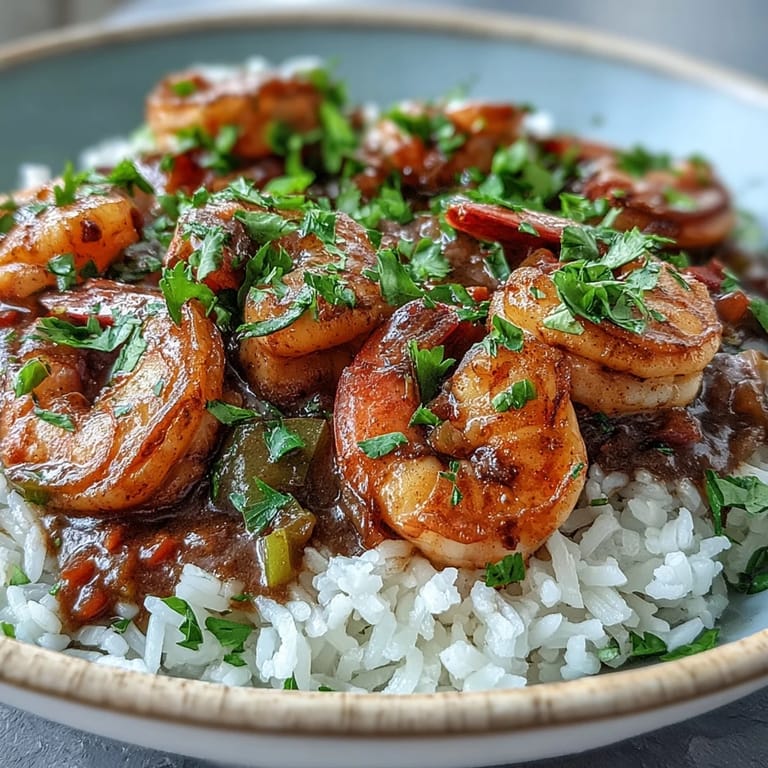
Save One rainy October night, I served this to friends who'd never been south of Virginia. They went quiet mid-conversation, forks working, eyes closed for a second. Someone said it tastes like a place, and I realized that's exactly what étouffée is supposed to do.
How to Get Your Roux Right
The roux is everything here, so use a heavy-bottomed pot that heats evenly and keeps hot spots from forming. Stir without stopping, scraping the corners and the bottom, and don't walk away even for a second. I learned this the hard way after ruining two batches in one week. If it smells like it's about to burn, pull it off the heat immediately and keep stirring, the residual heat will keep cooking it. The color you're after is deep brown, like a Hershey bar, not black.
Swaps and Variations That Work
I've made this with crawfish when my cousin brought some back from Louisiana, and the sweetness was incredible. Chicken thighs work too if you're not in the mood for seafood, just sear them first and add them back in to finish cooking. For a vegetarian version, I've used thick-sliced mushrooms and vegetable stock, and while it's different, it's still deeply satisfying. You can also fold in some andouille sausage with the shrimp for a smokier, meatier dish.
Storing and Reheating
Étouffée keeps beautifully in the fridge for up to three days, and honestly, it tastes even better after a night of rest when the flavors marry and deepen. I store it in a glass container and reheat it gently on the stove over low heat, adding a splash of stock if it's thickened too much. You can also freeze it for up to two months, though I prefer to freeze it before adding the shrimp and cook those fresh when I'm ready to serve.
- Let it cool completely before refrigerating to avoid condensation and sogginess.
- Reheat slowly and taste again before serving, you might want a pinch more salt or cayenne.
- Serve with fresh rice each time, day-old rice doesn't do this dish justice.
 Save
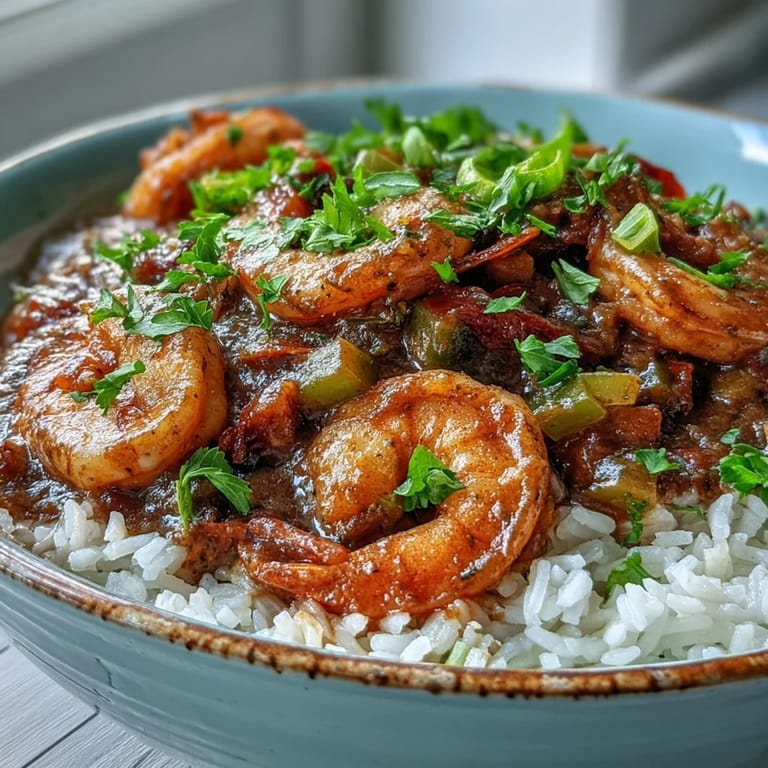
Save This dish doesn't need much from you except time and attention, and in return it gives you a bowl full of warmth, spice, and something that feels like home even if you've never been to New Orleans. I hope it becomes one of those recipes you make without looking, the kind you can feel your way through.
Recipe FAQs
- → What makes an authentic étouffée?
Authentic étouffée starts with a dark roux cooked to chocolate color, the holy trinity of vegetables (onion, bell pepper, celery), and shellfish simmered in a thick, flavorful sauce. The roux provides the foundation and distinctive deep flavor characteristic of Creole cooking.
- → How do I get the perfect dark roux?
Cook the flour and oil mixture over medium heat, whisking constantly for 15-20 minutes until it reaches a deep chocolate brown color. Patience is essential—don't rush the process or increase the heat, as the roux can burn easily. The darker the roux, the deeper the flavor.
- → Can I make this with other proteins?
Absolutely. While shrimp is traditional, you can substitute crawfish (classic Louisiana choice), chicken, andouille sausage, or even mushrooms for a vegetarian version. Adjust cooking times accordingly—chicken needs longer cooking, while mushrooms cook faster than shrimp.
- → Why does étouffée taste better the next day?
Like many braised dishes, étouffée benefits from sitting overnight as the flavors have time to meld and develop. The roux continues to thicken the sauce, and the spices penetrate more deeply into the shrimp. Reheat gently over low heat to maintain the sauce's consistency.
- → What's the difference between étouffée and gumbo?
While both use a roux base and the holy trinity of vegetables, étouffée is typically thicker with less liquid and focuses on one main protein. Gumbo has a thinner, soup-like consistency with multiple proteins and often includes okra or filé powder as additional thickeners.