 Save
Save My neighbor handed me a takeout container one evening, steam still rising from the lid, and said, "Try this—I made it myself." That's when I realized stir-fry didn't have to be a restaurant secret. The shrimp turned pink in seconds, the vegetables stayed snappy, and the whole thing came together faster than ordering delivery. Now it's my go-to when I want something that tastes like I spent hours in the kitchen but actually took less time than a phone call.
I made this for my sister during a busy weeknight when she needed comfort food but I had maybe twenty minutes. She watched the whole thing happen from the kitchen counter, and the smell alone made her shoulders drop. By the time the sauce thickened and clung to the shrimp, she was already reaching for a bowl—that's when I knew this recipe had real staying power.
Ingredients
- Large shrimp, peeled and deveined (1 lb): Buy them already prepped if your budget allows—it saves the mental load and you won't be standing there in cold water questioning your choices.
- Red and yellow bell peppers: The color matters here, not just for looks but because they add sweetness that balances the savory sauce.
- Broccoli florets: Cut them bite-sized so they actually cook in the time it takes everything else to come together.
- Carrot, julienned: Thin slices mean they'll soften just right instead of staying crunchy when you wanted tender.
- Sugar snap peas: These are the ones you can eat raw too, so if a few go missing before they hit the pan, the recipe won't suffer.
- Green onions: Half go in at the end for freshness, which is the move that makes people ask what you did differently.
- Low-sodium soy sauce: The low-sodium part lets the garlic and ginger shine instead of tasting like pure salt.
- Oyster sauce (optional): This is your umami secret—skip it if you're vegetarian, but don't skip it thinking it won't matter.
- Sesame oil: A little goes a long way; this isn't the cooking oil, it's the finishing touch that makes everything smell amazing.
- Honey or brown sugar: This cuts the saltiness and rounds out the flavors in a way that tastes complicated but isn't.
- Rice vinegar: It adds brightness without being loud about it, which keeps the sauce from tasting one-dimensional.
- Cornstarch mixed with water: This is how the sauce goes from thin to glossy and actually clings to everything instead of pooling at the bottom.
- Vegetable oil: Use something neutral—peanut oil works too and adds its own subtle flavor.
- Garlic and fresh ginger: Mince the garlic fine and grate the ginger so you hit both in the first few seconds of cooking, releasing all that aromatics magic.
- Sesame seeds and cilantro for garnish: These feel optional until you taste the dish without them, then you understand why they matter.
Tired of Takeout? 🥡
Get 10 meals you can make faster than delivery arrives. Seriously.
One email. No spam. Unsubscribe anytime.
Instructions
- Make the sauce first:
- Whisk soy sauce, oyster sauce, sesame oil, honey, rice vinegar, cornstarch, and water together in a small bowl until the cornstarch disappears. This step takes two minutes and means you won't be scrambling once the heat is on.
- Prep your shrimp:
- Pat them completely dry with paper towels and season with a pinch of salt and pepper. Wet shrimp won't brown properly, and that browning is where flavor lives.
- Cook the shrimp first:
- Heat one tablespoon of oil in your wok or large skillet over medium-high heat until it shimmers, then add shrimp and let them sit for about a minute before stirring. You want that slight char on one side before you move them around.
- Set aside and build flavor:
- Remove shrimp once they're pink throughout (usually two to three minutes total) and put them on a plate. The pan stays hot and ready for the next step.
- Awaken the aromatics:
- Add the remaining tablespoon of oil, then immediately add minced garlic and grated ginger. You have about thirty seconds before they go from fragrant to burnt, so stay close and listen for that sizzle to ease off.
- Add vegetables:
- Throw in bell peppers, broccoli, carrot, and snap peas all at once and keep stirring for three to five minutes. You're going for crisp-tender, which means they should still have a slight resistance when you bite down.
- Bring it all together:
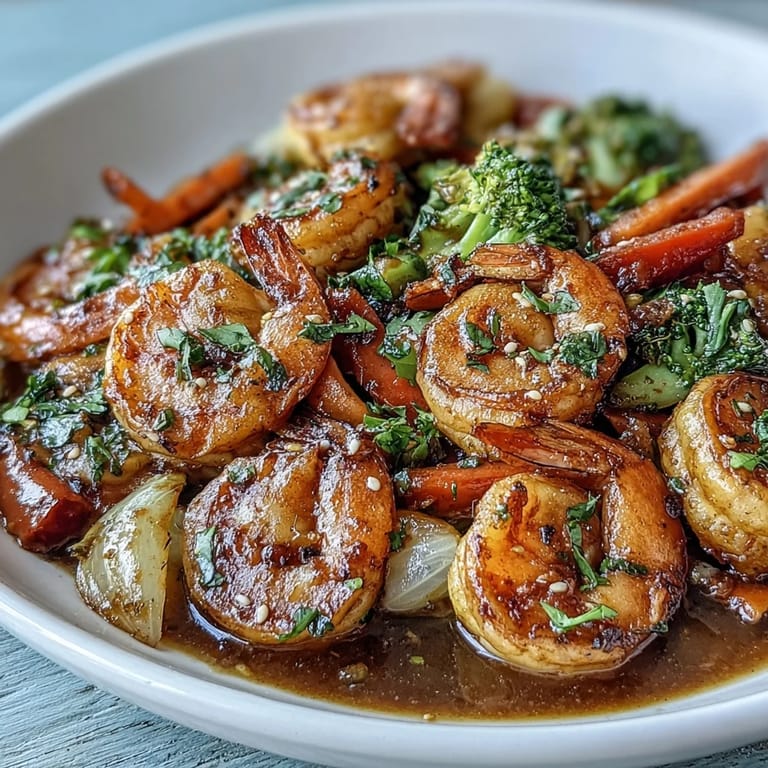
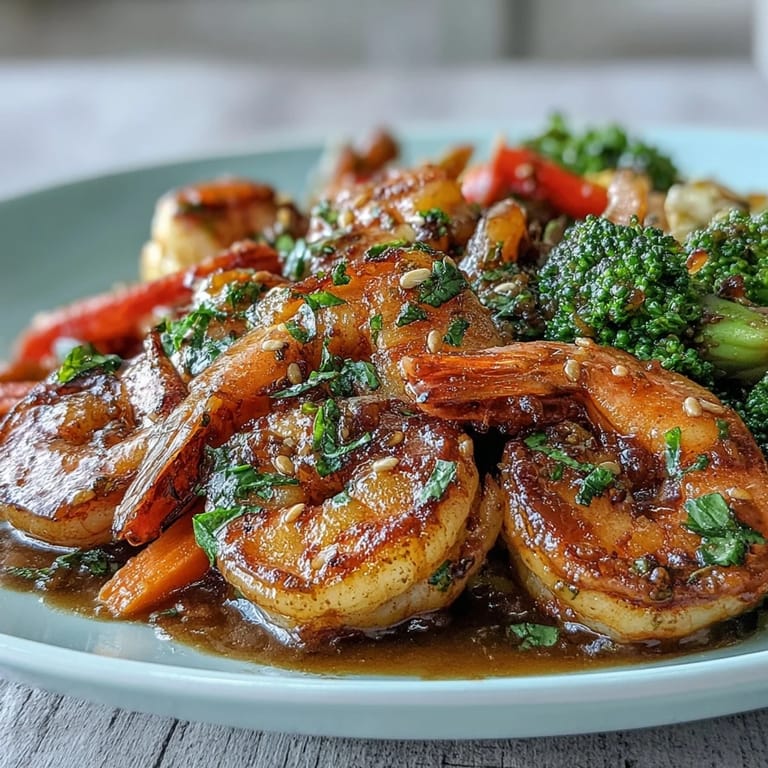
- Return the shrimp to the pan, scatter green onions over everything, then pour that sauce you made at the beginning over the whole situation. Stir constantly for two to three minutes and watch as the cornstarch does its magic and everything gets glossy.
- Finish and serve:
- Taste a piece of shrimp—it should be tender and not rubbery, which means you nailed the timing. Sprinkle sesame seeds and cilantro on top and eat it while it's still hot.
 Save
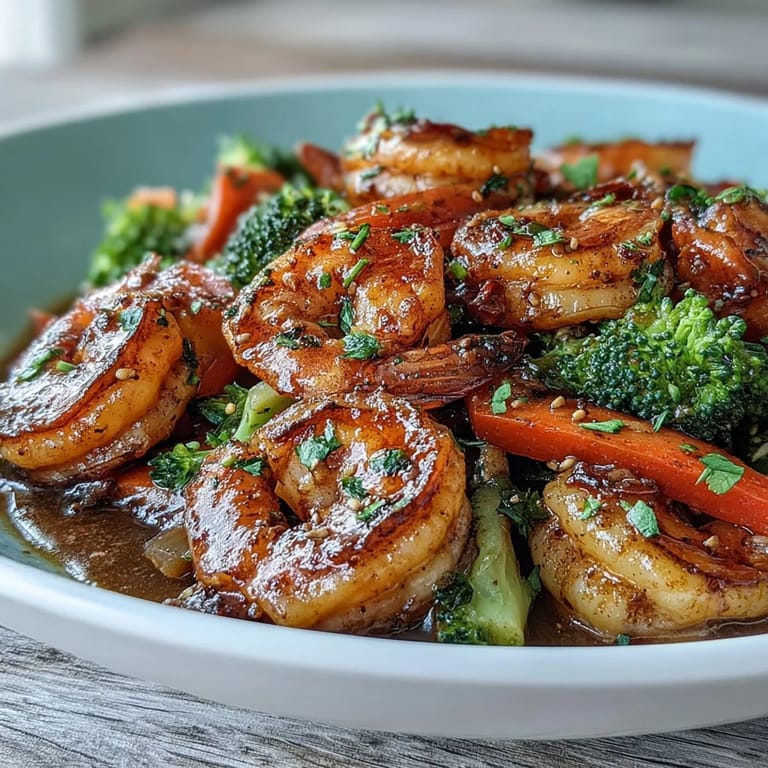
Save There's a moment right when the sauce hits the pan and the whole kitchen fills with this ginger-garlic-sesame smell that reminds me why I cook at all. It's the moment before the everyday becomes something worth sitting down for together.
Timing Is Everything
The first time I made this, I tried to cook everything at once and ended up with overcooked shrimp and undercooked broccoli. The second time, I cooked shrimp first and removed it, which changed everything—the shrimp stayed tender and the vegetables got the full three to five minutes they needed. Now I think of it like a relay race where each ingredient gets its moment, and they all meet up perfect at the finish line.
Vegetables and Swaps
I've made this with whatever was on sale or sitting in my fridge, and it's never disappointed me. Mushrooms, bok choy, water chestnuts, baby corn—they all work because the sauce is forgiving and flavorful. The only rule I've learned is to cut everything about the same size so nothing gets left behind while something else is already done.
Storage and Leftovers
Leftovers keep for two days in the refrigerator, though honestly they rarely make it past one. Reheat gently in a pan with a splash of water so the sauce loosens up again and nothing sticks. This is also brilliant over rice, noodles, or even cauliflower rice if you're thinking about it that way.
- Cold stir-fry makes a surprisingly good lunch salad the next day if you're feeling creative with what you have around.
- If you're cooking for two instead of four, just halve everything and use a smaller pan—the technique stays exactly the same.
- Make extra sauce if you like things saucier, because some people (and I am some people) believe there's no such thing as too much garlic-ginger coating on their vegetables.
 Save
Save This recipe gave me back fifteen minutes of my evening and the confidence that restaurant-quality food can come from your own kitchen. That's worth showing up for.
Recipe FAQs
- → How do I prevent shrimp from overcooking?
Cook shrimp quickly over medium-high heat until pink and opaque; remove promptly to avoid toughness.
- → Can I substitute vegetables in this stir-fry?
Yes, feel free to use vegetables like snap peas, mushrooms, or bok choy depending on preference or availability.
- → What is the role of cornstarch in the sauce?
Cornstarch helps thicken the sauce, giving it a glossy finish that coats shrimp and veggies evenly.
- → How can I add extra heat to this dish?
Add red pepper flakes or fresh sliced chili to the stir-fry sauce or while cooking vegetables for a spicy kick.
- → Is oyster sauce necessary for authentic flavor?
Oyster sauce adds richness but can be omitted or replaced with vegetarian alternatives for different dietary needs.