 Save
Save My sister called at seven in the morning on Mother's Day, not to chat but to ask if I could pull off Eggs Benedict for brunch. I'd never made hollandaise before, and my track record with poached eggs was embarrassing, but something about the challenge felt right. Two hours later, when I slid that first plate in front of her—the golden sauce catching the kitchen light, the egg yolk breaking just as she cut into it—I understood why this dish has stayed beloved for generations. It's not complicated, but it demands your attention, and that matters when you're cooking for someone you love.
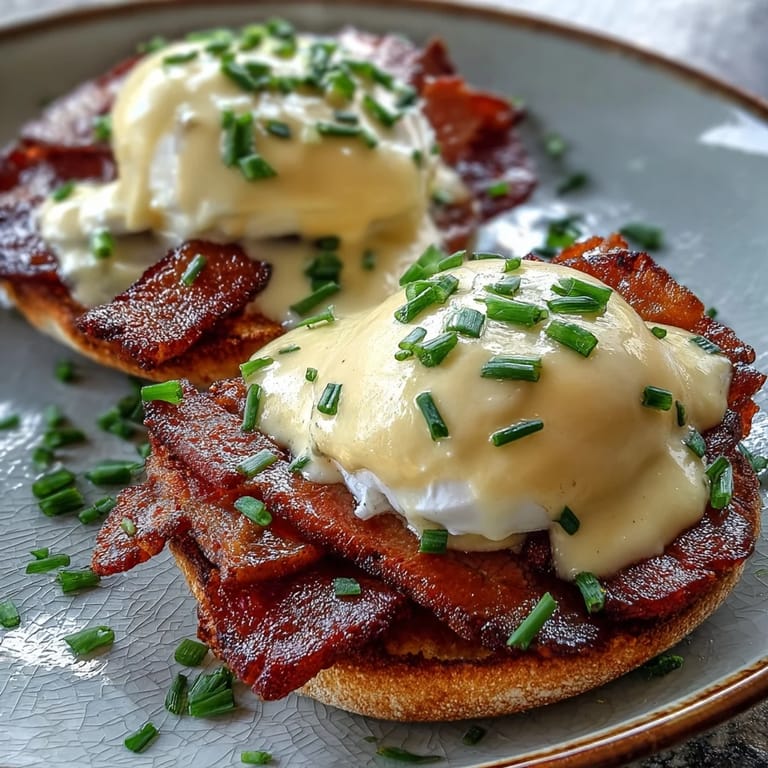
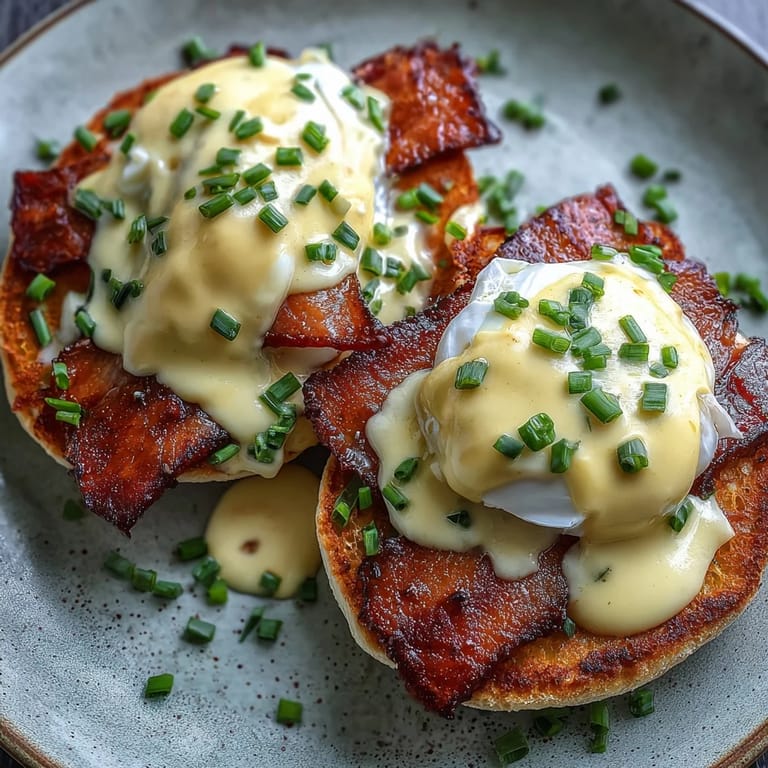
I learned something unexpected that first Mother's Day brunch—watching my sister close her eyes after that first bite, I realized this dish carries a kind of gentleness. It's not trying to impress, even though it looks impressive. The softness of the poached egg, the way the hollandaise melts into every crevice, the quiet richness of Canadian bacon—it all works together without shouting about it. That's when a meal becomes a memory.
Ingredients
- English muffins: Choose ones with good nooks and crannies so they toast unevenly and catch the hollandaise—flat muffins won't do this dish justice.
- Canadian bacon: The thicker cut matters here; it holds its shape and adds subtle smoke without overpowering the delicate poached eggs.
- Large eggs: Fresher eggs hold together better when poaching, so check your carton date if you can.
- White vinegar: This is non-negotiable for poaching; it helps the egg whites set faster and keeps them from spreading into wispy strands.
- Egg yolks for hollandaise: Room temperature yolks emulsify more smoothly, so let them sit out for ten minutes before whisking.
- Unsalted butter: Melt it gently and let it cool just slightly before adding—too hot and you'll scramble the yolks, too cold and the sauce seizes.
- Lemon juice: Freshly squeezed makes a difference; bottled can taste flat and won't brighten the sauce the same way.
- Cayenne pepper: A tiny pinch wakes up the richness without making anyone cough.
Tired of Takeout? 🥡
Get 10 meals you can make faster than delivery arrives. Seriously.
One email. No spam. Unsubscribe anytime.
Instructions
- Building your hollandaise foundation:
- Set that heatproof bowl over simmering water (not touching it—this is the whispered secret that stops hollandaise from breaking) and whisk egg yolks with lemon juice until they pale and thicken slightly, about two minutes. You'll feel the texture change under your whisk and that's exactly when you start adding butter.
- The butter marriage:
- Drizzle melted butter in slowly, whisking constantly like you're coaxing the sauce together rather than forcing it. If you rush this, the sauce will break and separate, so patience here rewards you with silky, luxurious results.
- Seasoning and keeping it warm:
- Once the sauce reaches glossy thickness, taste it and add salt and cayenne to your preference, then move it off the heat immediately. Keep it covered somewhere warm but not hot—a turned-off oven or even a warm water bath works perfectly.
- Crisping the Canadian bacon:
- A medium skillet and one to two minutes per side gives you those lightly caramelized edges that add textural contrast. Don't crowd the pan or the bacon steams instead of sears.
- The poaching moment:
- Bring salted water with vinegar to a gentle simmer (not a rolling boil—aggressive heat tears the eggs), create a gentle whirlpool with a spoon, crack the egg into a small cup first, then slide it into the center. The egg whites will immediately start setting and you'll know in thirty seconds if you've got good structure.
- Timing your eggs:
- Three to four minutes gives you set whites with a soft, runny yolk—the gold standard. If you like them firmer, add a minute, but the moment you go over five minutes, that yolk starts firming up and you lose the magic.
- Assembly with care:
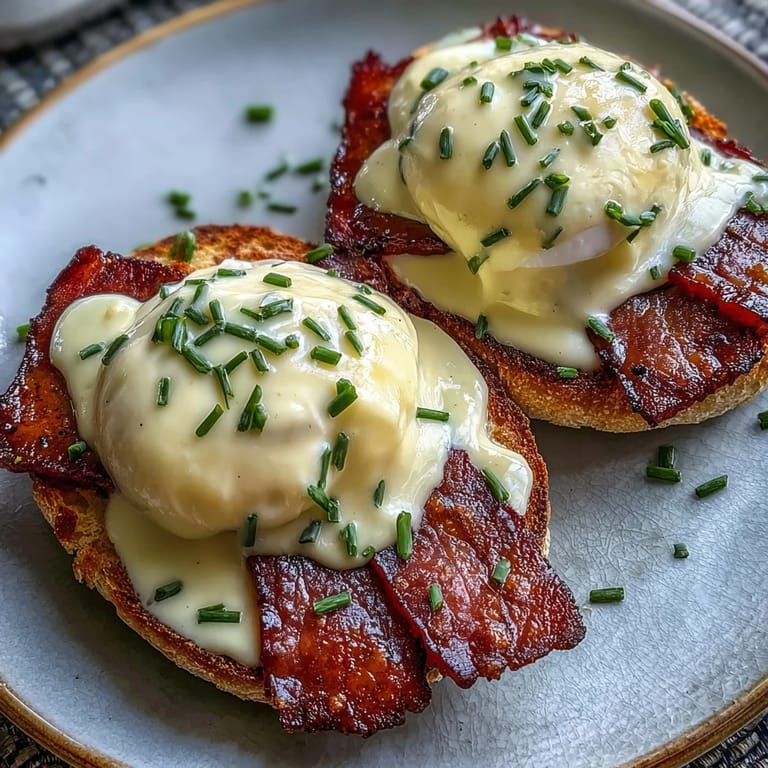
- Warm your plates beforehand so everything stays hot longer, toast those muffins right before plating, and stack bacon then egg then hollandaise in that order. Garnish just before serving or the herbs wilt.
 Save
Save I've made this dish maybe thirty times now, and it never stops feeling special. There's something about a meal that requires actual technique, where each component matters and timing counts—it focuses you in a way that reminds you cooking is an act of care.
Making Hollandaise Less Intimidating
The first time I made hollandaise, I treated it like I was defusing a bomb. Looking back, that anxiety was completely unnecessary—it's just three ingredients that want to become friends. The key is understanding that egg yolks naturally thicken when whisked, and butter naturally emulsifies when added slowly. You're not fighting against chemistry; you're working with it. Once you've made it once and watched the transformation from separated ingredients to silky sauce, you'll never worry about it again.
Poaching Eggs Without Fear
Poaching intimidated me for years until I stopped thinking of it as one complicated technique and started seeing it as four simple decisions: water temperature (gentle simmer), vinegar (yes, always), a little spin (to center the egg), and time (watch it, don't guess). My breakthrough moment came when I realized that poached eggs aren't fragile—they're actually more forgiving than scrambled eggs if you let them alone. The water does the work; you just have to trust it.
Variations and Personal Touches
The beauty of Eggs Benedict is that it's a framework, not a rigid rule. I've made Eggs Florentine with wilted spinach on rainy weekends, Eggs California with avocado slices in summer, and once even Eggs Royale with smoked salmon for a friend's birthday brunch. Each variation changes the mood of the dish while keeping that perfect poached egg and hollandaise at its heart. You're limited only by what you have in your kitchen and what sounds good in that moment.
- Swap the Canadian bacon for smoked salmon, sautéed spinach, or ripe avocado depending on your mood or dietary preferences.
- Toast your English muffins in a skillet with a little butter instead of a toaster—the flavor deepens and you get more control over the color.
- Make the hollandaise ahead and reheat it gently over barely warm water; it keeps for up to two hours and saves you stress on busy mornings.
 Save
Save Eggs Benedict taught me that restaurant food isn't mysterious—it's just someone paying attention to technique and timing. Make this once, and you'll add it to your rotation of go-to special breakfasts.
Recipe FAQs
- → How do you poach eggs perfectly?
Simmer water with vinegar, gently slide eggs in, and cook for 3-4 minutes until whites set but yolks remain soft.
- → What is key to making smooth hollandaise sauce?
Whisk egg yolks and lemon juice over gentle heat, slowly adding warm melted butter to create a thick, glossy sauce.
- → Can I substitute Canadian bacon for a vegetarian option?
Yes, sautéed spinach or avocado works well as a flavorful alternative to Canadian bacon.
- → How should hollandaise sauce be kept warm?
Keep it warm (not hot) by covering and placing it over a gentle simmer or in a warm spot to avoid curdling.
- → What sides complement this dish well?
Fresh fruit or mixed greens perfectly balance the richness of the eggs and sauce.
- → What tools are essential for preparing this dish?
A saucepan, whisk, skillet, heatproof bowl, slotted spoon, and toaster help ensure perfect cooking and assembly.